
PICK UP
Pro Basics and Tips
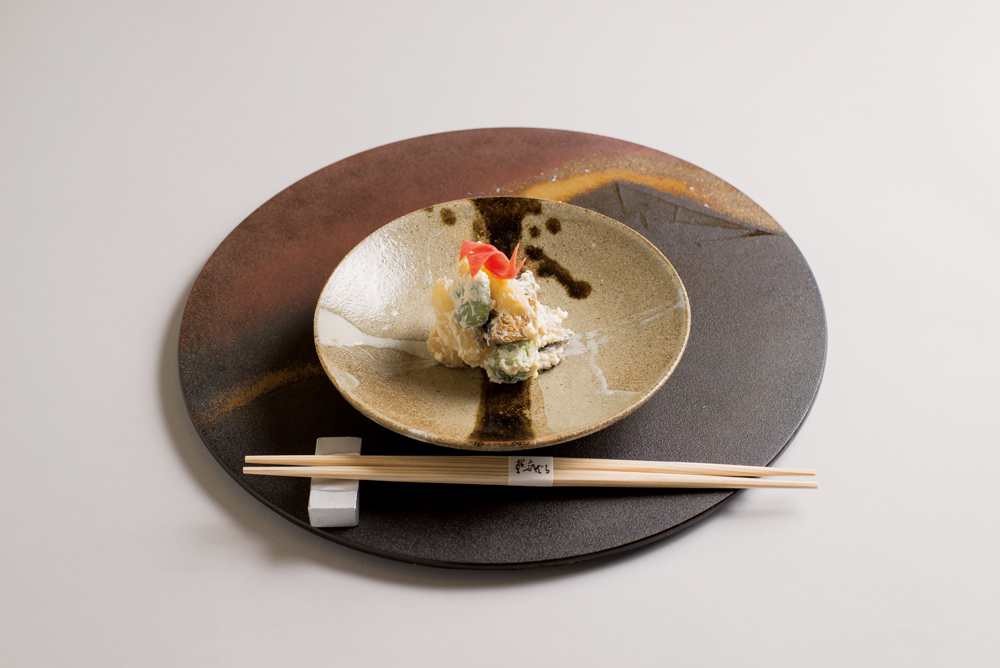
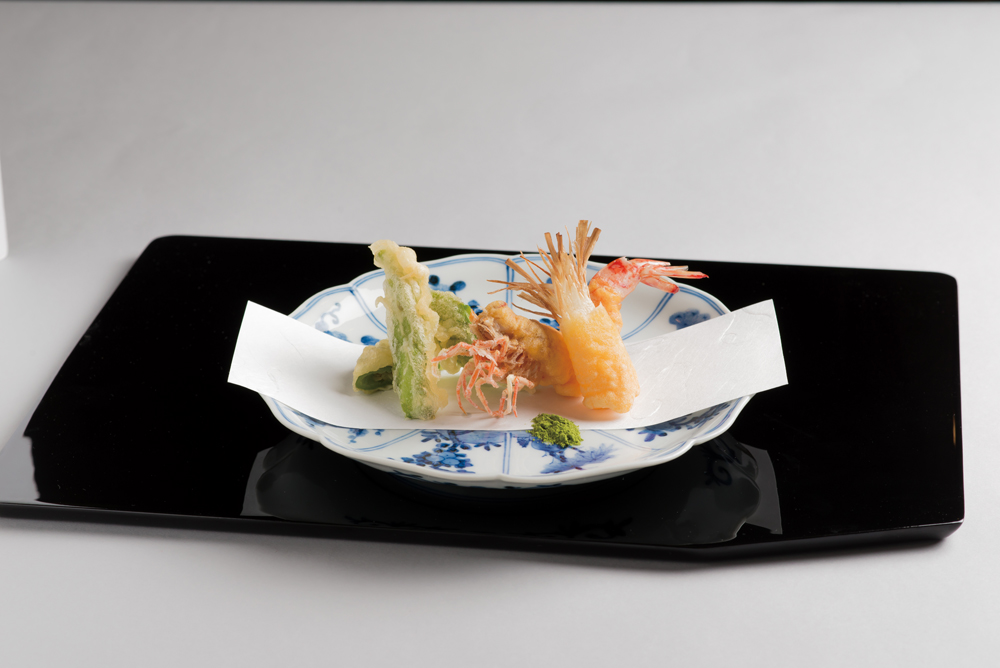
Mugwort tofu coated in brown rice and deep-fried, grated-daikon style, leaf onion, angelica-tree shoots, ostrich fern fiddlehead, saxifrage, butterbur sprout, ginger
Since the mugwort added during mixing brings extra moisture, the mixture is kneaded and packed even more firmly than for sesame tofu. Also, because I wanted to serve the sesame tofu together with wild mountain vegetables, I coated the mugwort-mixed tofu with brown rice and deep-fried it. This brown-rice coating and deep-frying is something we do often at our restaurant — I've tried coating it with all kinds of things, but I think the umami-rich brown rice tastes best.
DETAIL
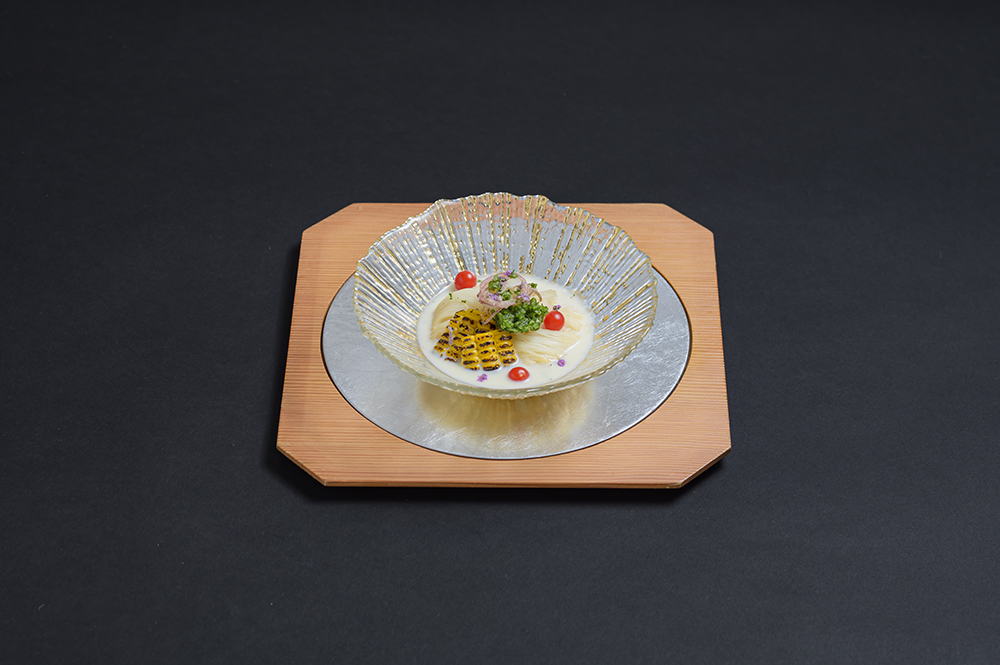
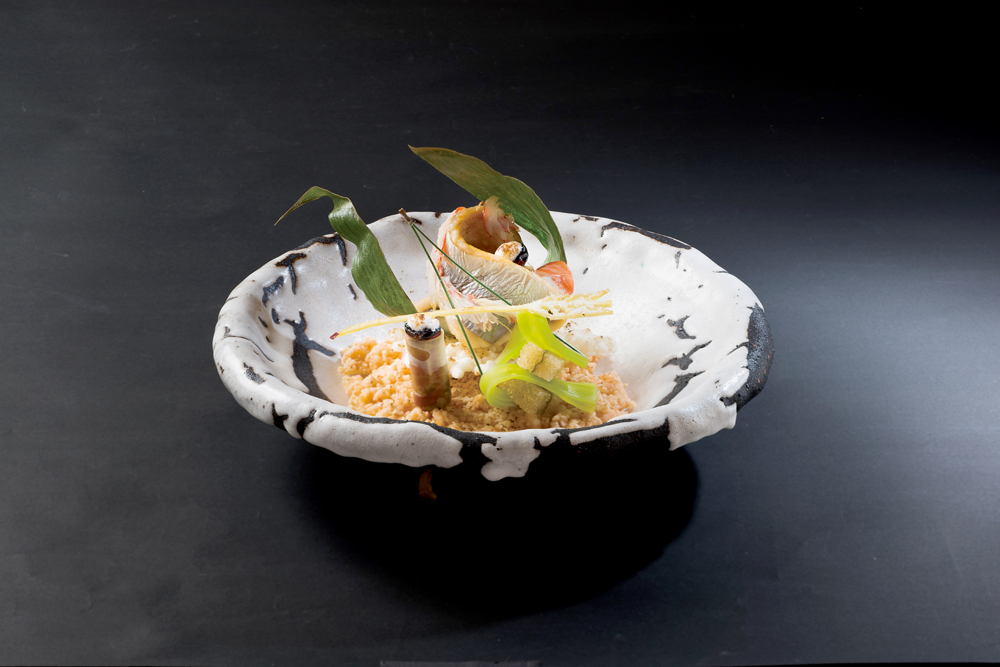
Sesame tofu with rapeseed blossom, sprout-wrapped herring roe, smoked octopus, petal-cut lily bulb, and wasabi
This time, on 'bowl dishes,' I learned from instructor Miyata (Kioichō's Hotel New Otani). This time I take up 'goma-dōfu.'
DETAIL
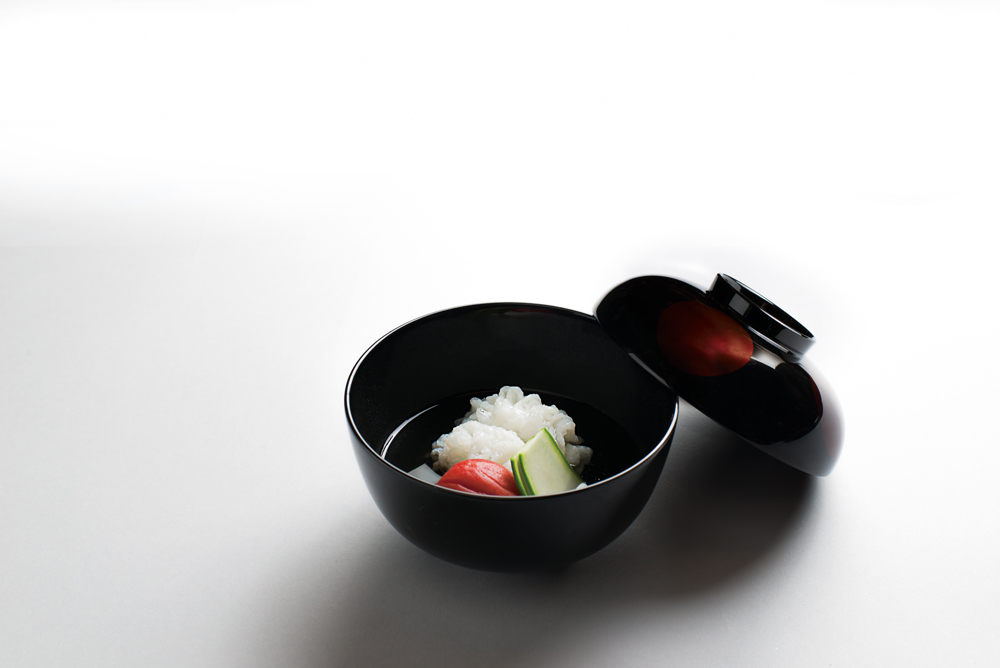
Scattered sushi with flower-cut lily bulb, shrimp, simmered conger eel, snap pea, sansho leaf, kanpyo, simmered dried shiitake, vinegared lotus root, and ikura
You can top chirashi-zushi with anything you like, but for food-safety reasons, it's better to use ingredients that have been cooked. This bara-chirashi-zushi scatters a wide variety of ingredients across the top, making its vivid colors truly stand out. Since it's springtime, I paired it with a bamboo shoot and wakame clear soup as the accompanying soup course.
DETAIL
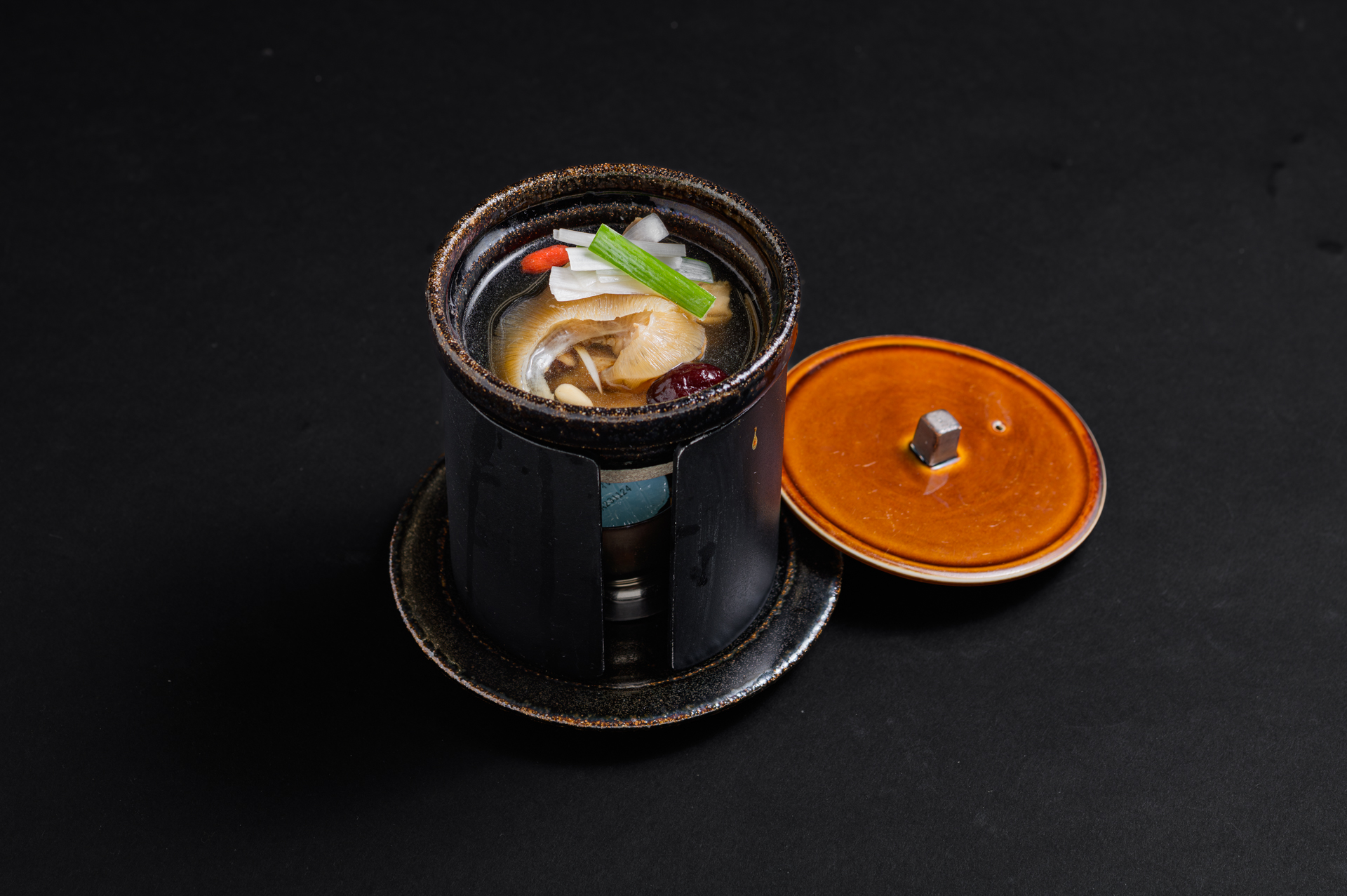
Shrimp sweet rolled omelet, with yuzu sweet rolled omelet and stir-fried simmered mustard greens
This time, on 'bowl dishes,' I learned from instructor Miyata (Kioichō's Hotel New Otani). This time I take up 'date-maki.'
DETAIL
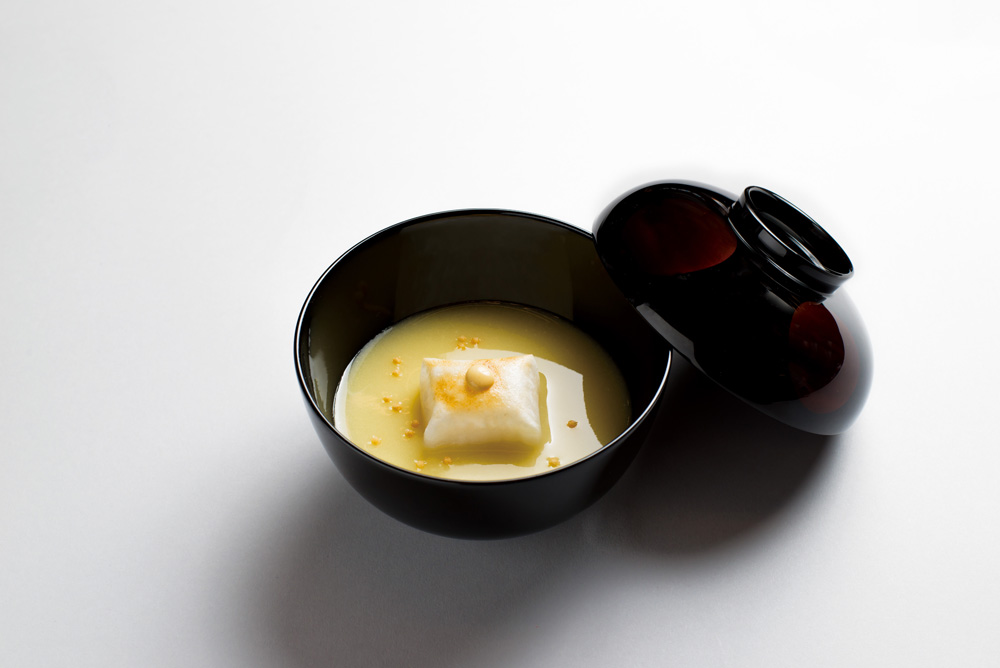
Sea bass seared in sansho oil, with crisped fish-skin cracker, Manganji green pepper, vinegared myoga bud, tade vinegar dressing, fried sansho berries, and sansho oil powder
I used a fragrant oil made from fresh sansho berries and rice bran oil, and finished the dish through low-temperature cooking for a plump, moist result. Rice bran oil is light and healthy, and I use it in consideration of today's food allergies. So that guests can enjoy it with a refreshing finish, I turned the tade-zu into a dressing using the now-popular clear soy sauce. For thickening, the starchy water from cooking rice works fine, but I think using a baby-food 'thickening base' product would also work well. I've turned the sansho-scented oil into a powder using Maltosec, which can transform oils and fats like chocolate into various forms — I think this makes for good conversation with guests.
DETAIL
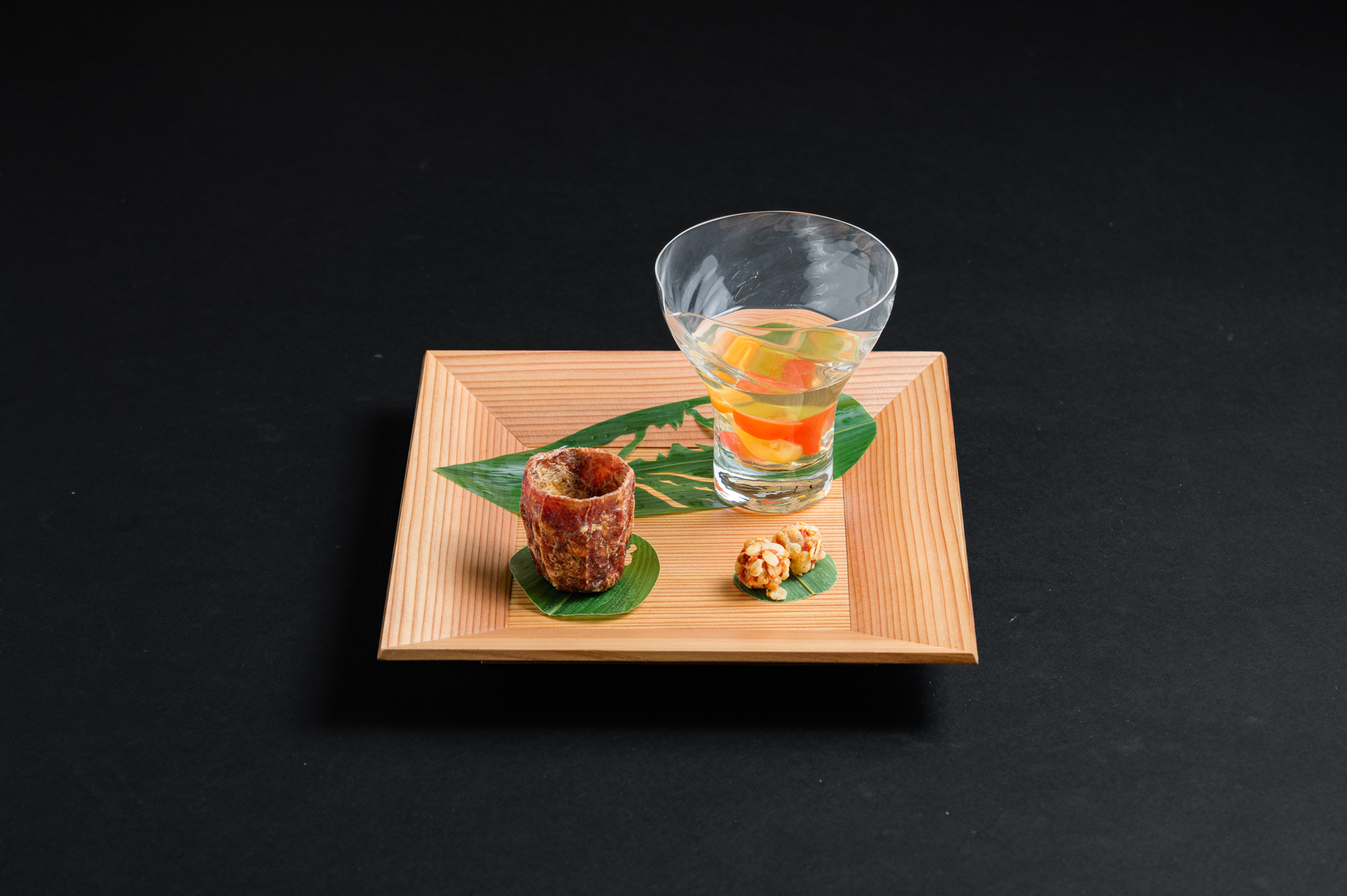
Sea bass, oil-seared, Manganji green pepper grilled and dashi-steeped, kofuki-dusted ginger, vinegared myoga bud, tade vinegar
This time, on 'grilled dishes,' I learned from technical director Iwata (Royal Park Hotel). I take up 'abura-yaki.'
DETAIL
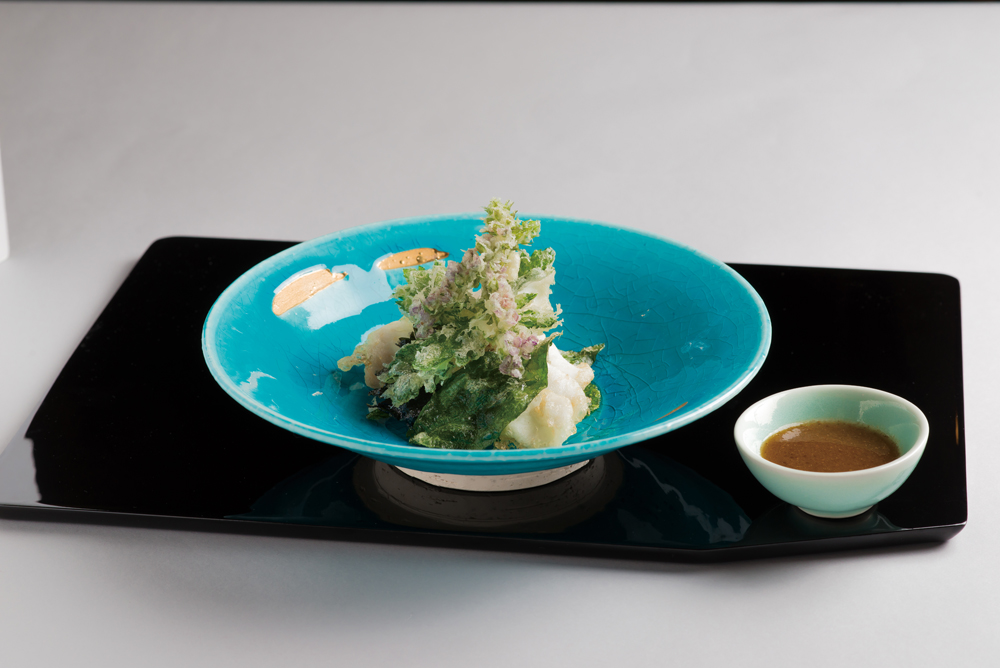
Grilled Kamo eggplant somen (Challans duck, shrimp cracker, fried scallion, umami powder, clarified miso sauce)
Eggplant sōmen is a long-established preparation, but I made it as a grilled sōmen so as not to break it apart. In plain hot water the kuzu starch would wash away, so the key is to place it into water infused with kuzu and finish it with a smooth, slippery texture. Challans duck has a characteristically wild, richly flavorful taste, so I finished it Peking-duck style to bring out the umami of its fat. As for the sauce, using miso as-is would make it too heavy, so I used only the clear supernatant liquid, which carries just the aroma and saltiness, seasoned it with soy sauce and red sake, and added ground sesame for depth. I used Ina Food Industry's 'Petit Drip' to make it easy to coat and eat.
DETAIL
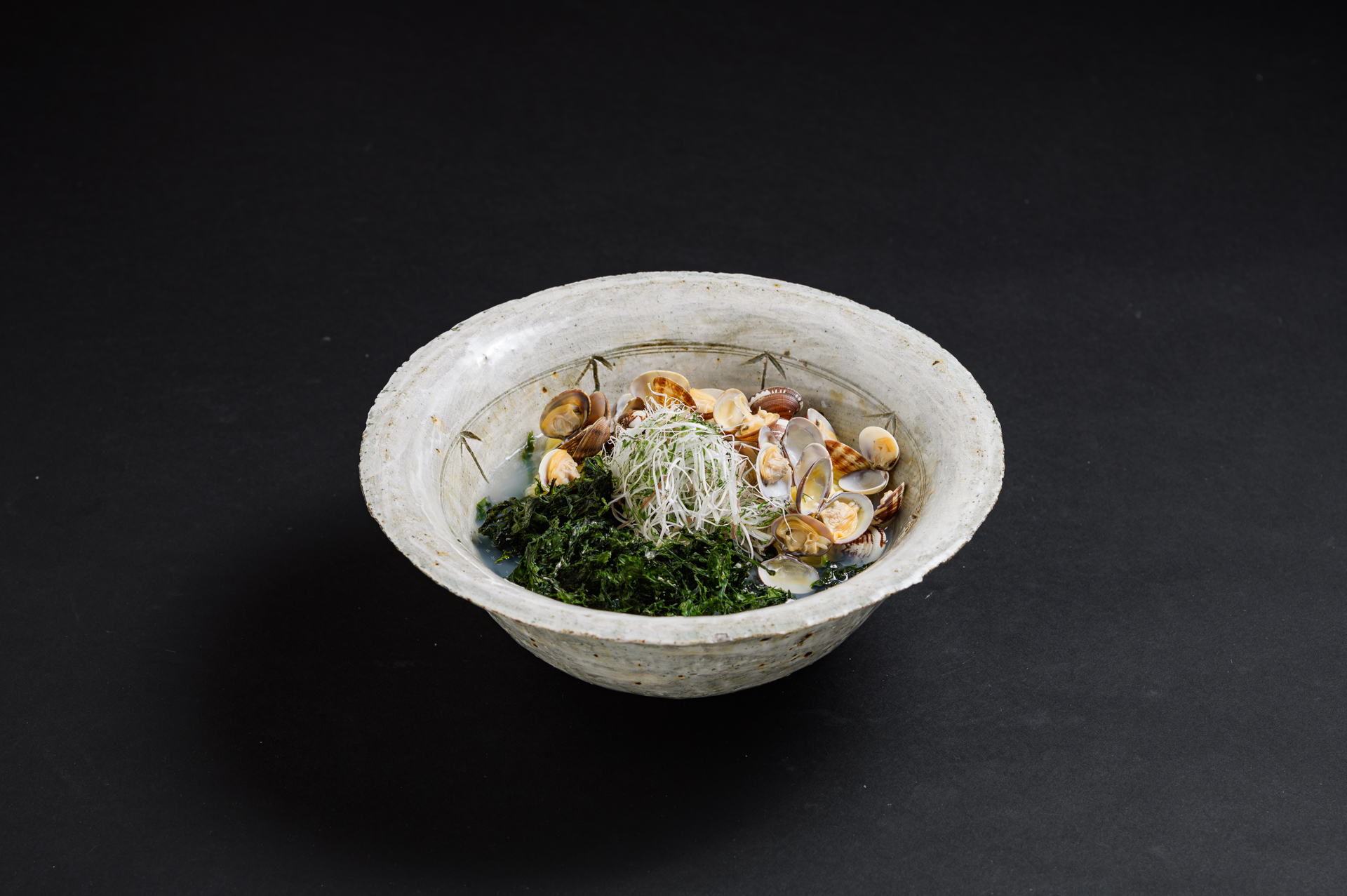
Kamo eggplant, mansion-style platter: miso-glazed grilled Kamo eggplant, salt-steamed aigamo duck, aze-mame edamame, shrimp simmered in sake, thread-cut flower garnish, and pickled ginger shoot
This time, on 'grilled dishes,' I learned from technical director Iwata (Royal Park Hotel). I take up 'shigi-yaki.'
DETAIL
Blended-dashi clear soup: autumn-brocade tilefish and turnip, habutae-steamed; matsutake with sprouted scallion; garnish of hail-cut yuzu
When folding the grated turnip into the meringue, it's important not to overmix — I think it's best to fold it in loosely, leaving the fluffy texture intact. I thought about how to make the turnip-and-egg-white steamed dish efficiently, without extra effort. Normally, pouring the soup stock over it would cause the steamed dish to collapse, but by covering it with a sheet of pounded mochi, it holds its shape beautifully, and diners can also enjoy the pounded mochi's distinctive texture as well.
DETAIL
Turnip in grated-daikon broth: seared tilefish, matsutake with grilled leaf-shaped mountain yam, maple-leaf-cut carrot, and Edona greens; garnish of pine-needle-cut yuzu
This time, on the 'clear-soup course,' I learned from instructor Hiratsuka (Kappō Yamato). I take up 'kaburana mizore-jitate.'
DETAIL
Cod milt pureed soup, winter-solstice pumpkin dumplings, snow-ring-cut daikon, stem lettuce, straight-cut yuzu peel
As for the red beans set into the pumpkin shiratama dumplings, season them with the minimum amount of sugar so the sweetness doesn't stand out. To make the most of the kumoko's umami, season with only kombu dashi and a small amount of seasoning, finishing it as a blended pureed soup. If the kumoko has a strong smell, adding milk when rinsing it in water can help suppress the odor.
DETAIL
Clear-soup style (cod milt tofu, snow crab, rock tripe, slender daikon, knotted yuzu peel)
This time, on the 'clear-soup course,' I learned from instructor Hiratsuka (Kappō Yamato). I take up 'kumoko-dōfu.'
DETAIL
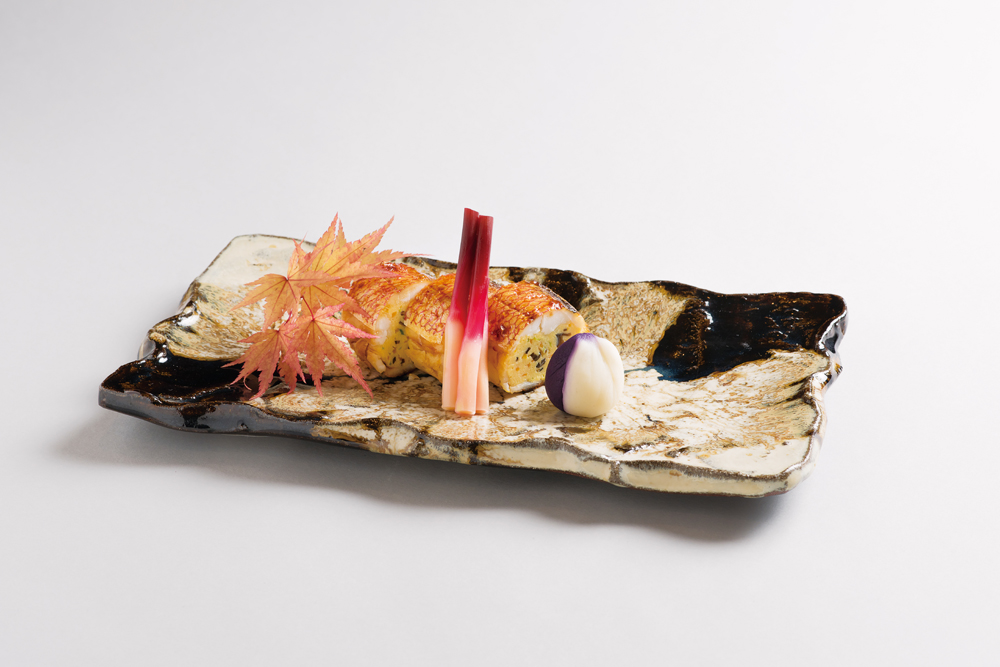
Sesame-milk tofu, kintsuba-style, butterbur miso, flame-seared sea urchin, grilled bamboo shoot, fried scallion, cherry-blossom petals
When making sesame tofu, soaking the sesame overnight in kombu dashi before blending it makes the sesame plump back up and brings out its flavor more easily. Doing this also results in a beautifully white finish.
DETAIL
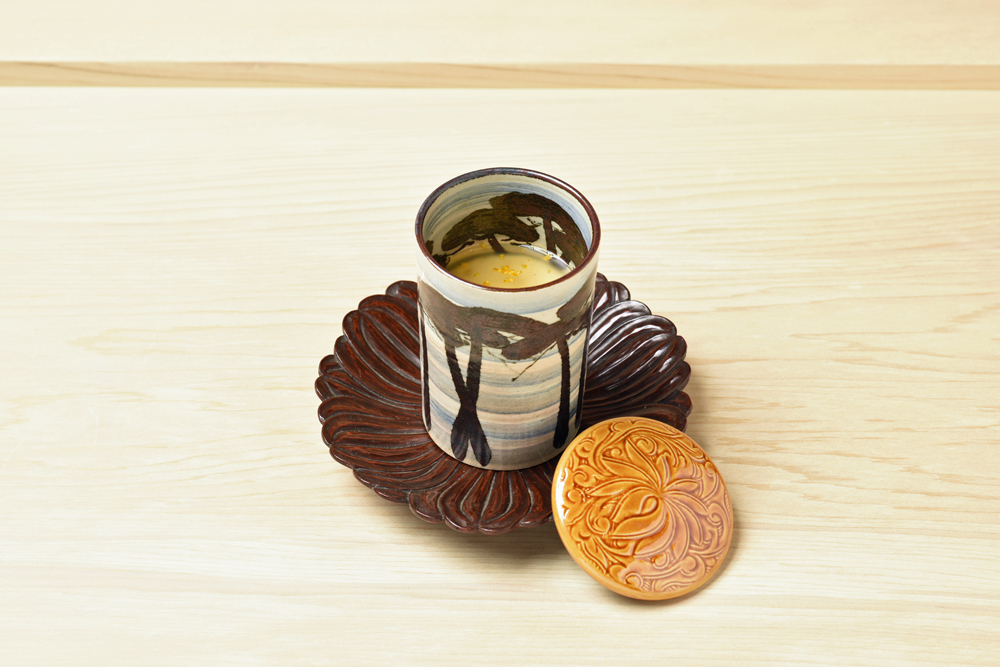
Butterbur-miso salad, sea urchin, bamboo shoot, sprouted scallion, salted cherry blossom, toasted sesame
This time, we learned about the appetizer course from Technical Director Masumoto (Norinchukin Bank, Meguro Annex). We feature fuki miso salad.
DETAIL
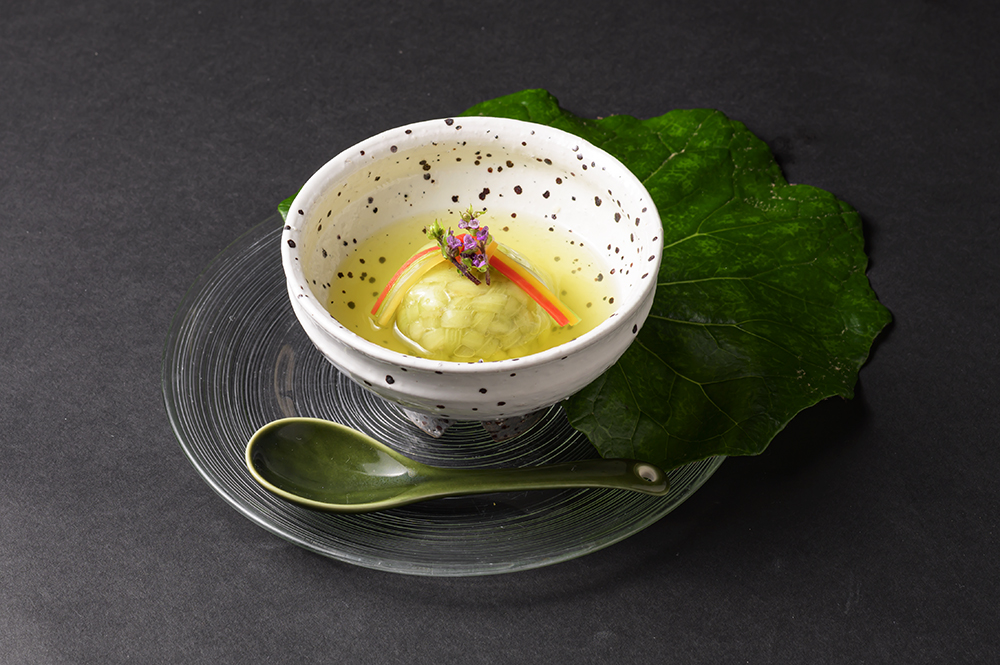
Shimeji mushroom and kishimen hakusen-age, autumn eggplant egg-yolk deep-fry (salmon and mountain yam, checkered egg-yolk deep-fry, leaf-cut sweet potato, pine-needle-cut tea soba, kinzanji miso, tartar sauce, shuto salt, young rakkyō, soy sauce)
When wrapping salmon and mountain yam in tatami-iwashi (a pressed sheet of dried baby sardines), lightly steaming the tatami-iwashi first softens it and makes it easier to wrap. It's also a good idea to lightly brush on a little raw fish paste to help the filling stay wrapped securely. By combining familiar, everyday ingredients with an extra bit of effort, we turned this into a dish with real added value. On top of that, we designed the dipping sauces to give guests both interest and impact. The Kinzanji tartar is our house-made Kinzanji miso, with the sweetness held back and mustard and mayonnaise added — it's popular with guests and lends itself to a wide range of uses.
DETAIL
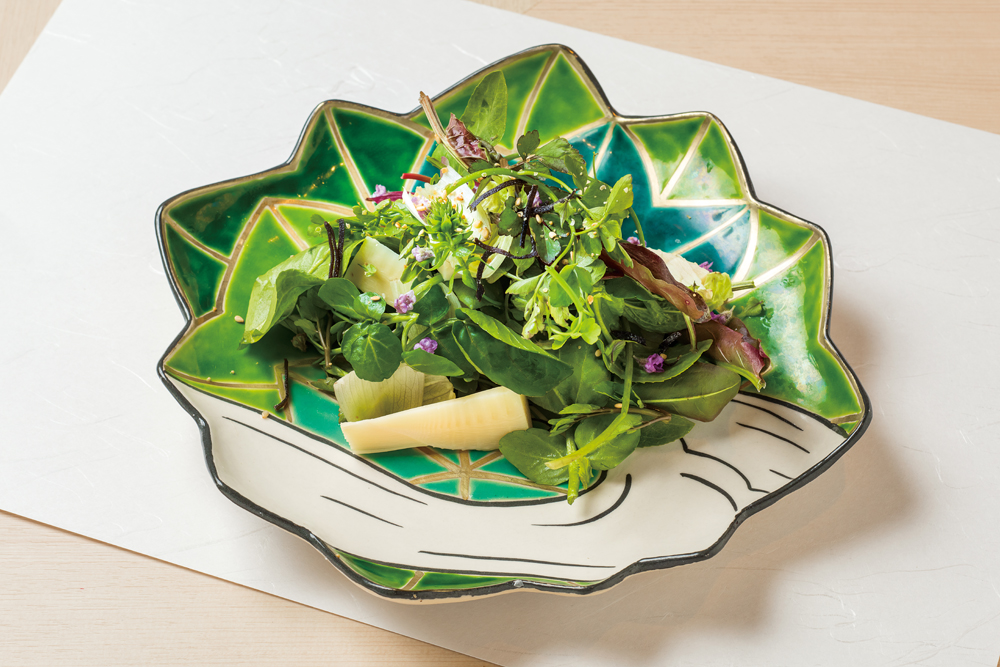
Spiny lobster egg-yolk deep-fry — matsutake hakusen-age, sudachi, plain salt
This time, we learned about fried dishes from newly certified Instructor Tsuji (Wanmiya). We feature batter-frying.
DETAIL
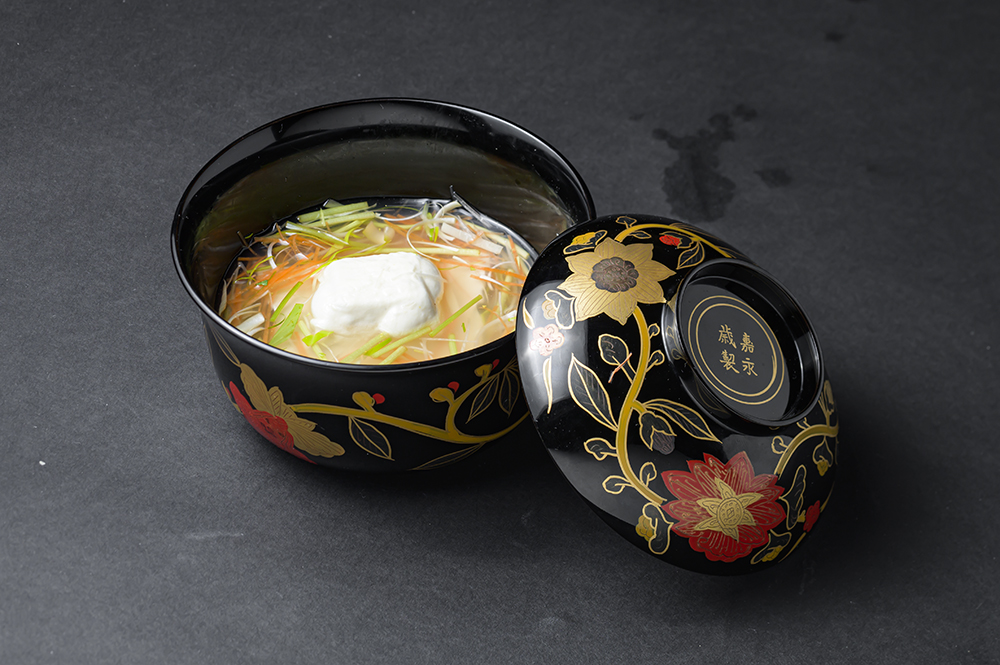
Potato-and-bacon straw-cape deep-fry — oyster deep-fried in roasted rice flour, pinecone-cut taro, driftwood-style maitake, yuzu
Each ingredient is well seasoned before frying, so the dish stays delicious even after it cools, and it can also be adapted into a takeout item. We designed the dish so that varying the coating leaves a lasting impression on guests. For the potato-and-bacon mino-age, we use five-colored sōmen noodles to give it a vividly colorful finish. For the oyster kōsen-age, we grind the currently trendy habanero snack into a powder, so guests can enjoy a bit of variation and kick in the flavor.
DETAIL
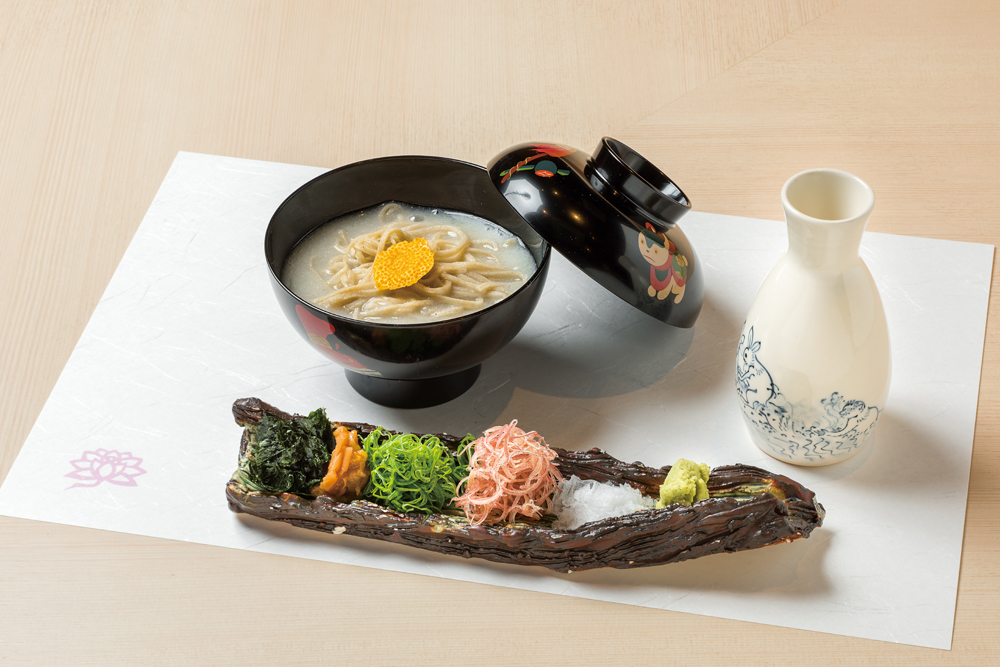
Shiba shrimp mino-age (oyster shin-biki-age, fried root vegetable with cheese, ginkgo-leaf-cut sweet potato, dead-branch-cut burdock, rice-ear garnish, sudachi)
This time, we learned about fried dishes from newly certified Instructor Tsuji (Shibadaimon, Wanmiya). We feature an accompaniment fry course.
DETAIL
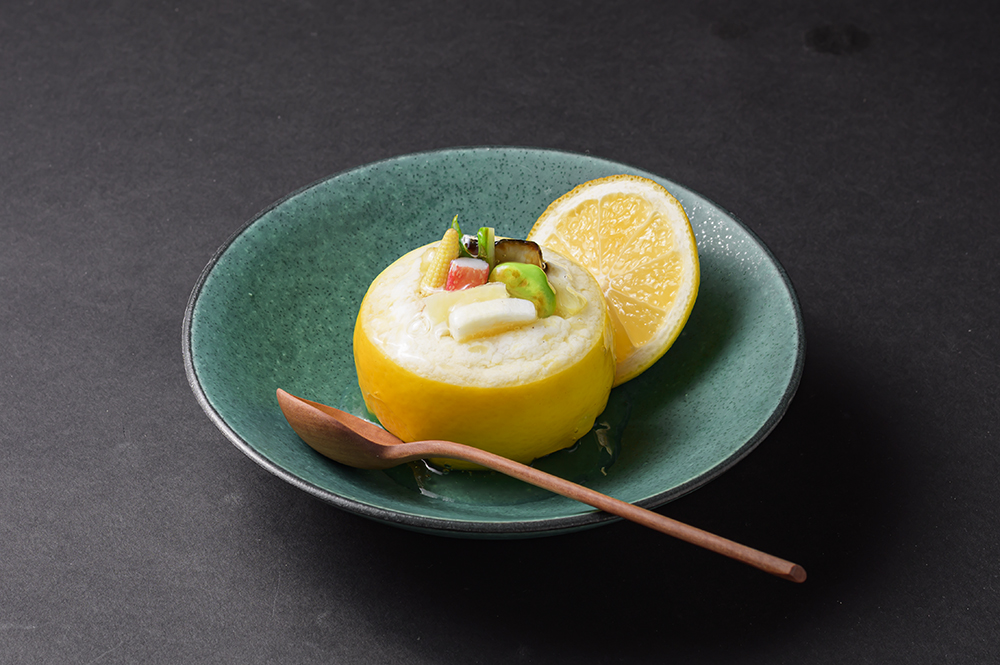
Spring sea bream rolled with wild mountain vegetables, bracken, bamboo shoot, butterbur, hook-tip bracken, turnip greens, lily bulb, sansho leaf
After rolling the wild mountain vegetables inside the sea bream, we wrap it in a continuous ribbon of daikon and steam it. This keeps the skin from shrinking and the flesh from curling back. Daikon is a vegetable with no strong character of its own, so steaming it together doesn't add any flavor to the fish. The moment the lid of the soup bowl is lifted matters most, so we went to this extra effort to make this spring sea bream roll with wild mountain vegetables. Since it's spring, we rolled in wild mountain vegetables, but depending on the season it's also delicious rolled with mushrooms like king oyster mushroom or matsutake, and it also pairs nicely combined with turnip and the like — please do try it.
DETAIL
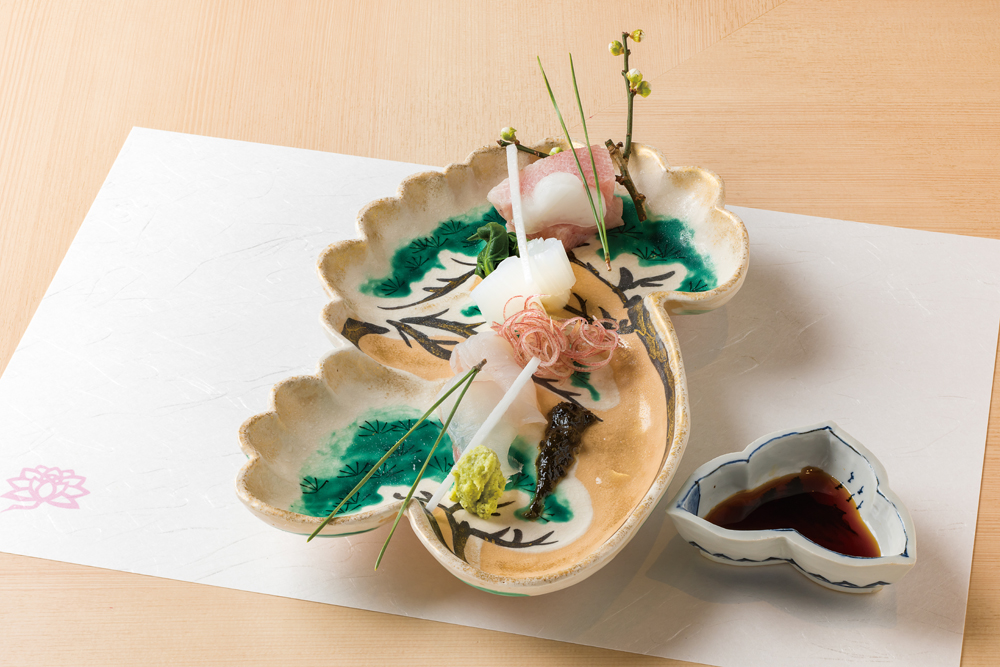
Spring sea bream in clear seafood broth — seared tofu, shiitake, garland chrysanthemum greens, julienned scallion, sansho leaf
This time, we learned about the clear-soup course from Instructor Wada (Nihon Ryōri Aogaki). We feature the clear seafood broth.
DETAIL
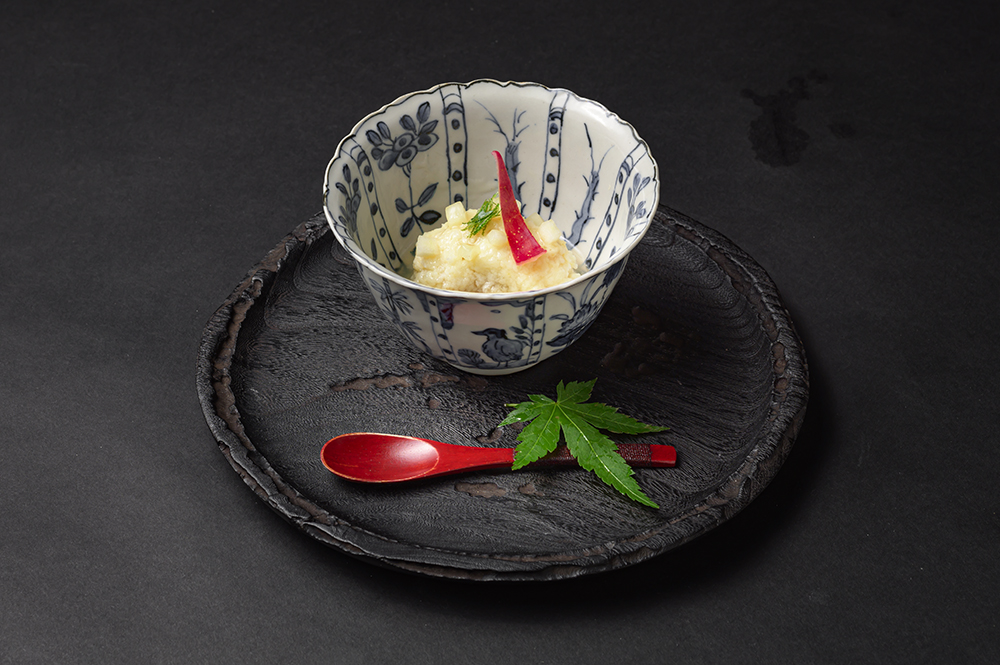
Fava bean pureed soup, fat greenling, steamed sea urchin, new-season water shield, cherry tomato, yuzu
Fava beans are also called satsuki-mame, or "May beans," an ingredient at its best around May. This time I used them for their fresh green color, but besides fava beans, green peas or corn also make a delicious pureed soup. This time I've made it as a chilled clear-soup course of fava-bean pureed soup. I use fat greenling as the soup's main ingredient, but I salt it and remove the skin before cooking it through. There is umami — and also an off-flavor — between the skin and the flesh, and if it's left cold the flesh turns firm, so I take this extra step for that reason. For the finishing broth, I think it's more delicious when diluted with a stronger proportion of bonito dashi relative to the fat greenling dashi.
DETAIL
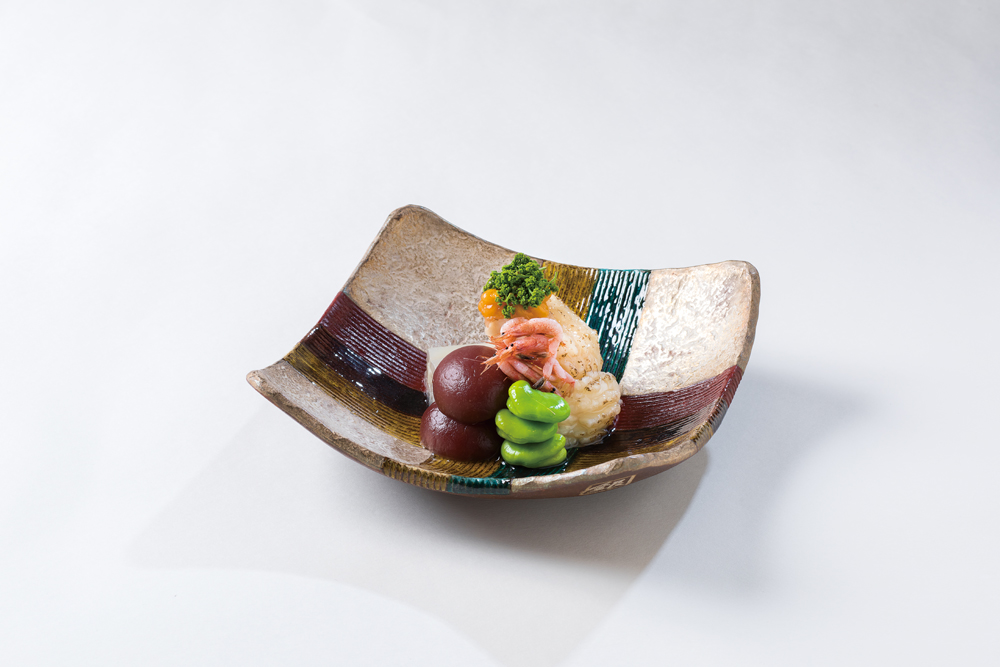
Fat greenling dusted with kuzu starch — new-crop water shield, small bok choy, shiitake, yuzu
This time, we learned about the "clear-soup course" from Instructor Wada (Nihon Ryōri Aogaki). We feature the "ainame clear-soup course."
DETAIL
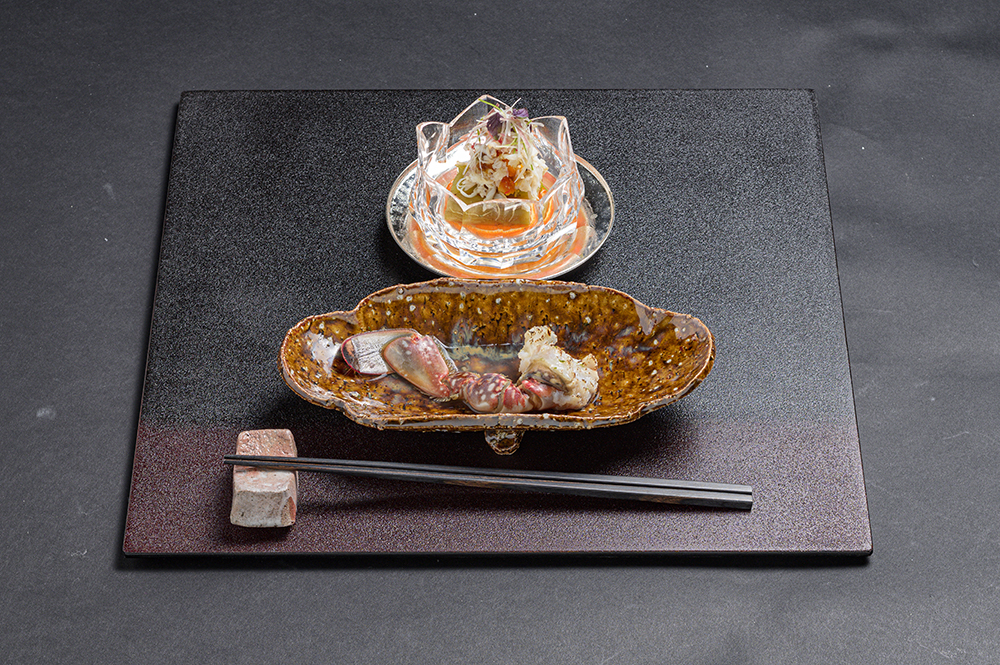
Whiting, hakusen-age, conger eel semolina-fry, tomato salt, shiso salt
The shiso salt served alongside is made by drying shiso leaves — which often go to waste — in the oven until the moisture is gone and they turn into fine flakes, then mixing them with salt. The shiso's aroma is fresh and delicious. When you flatten the whiting thin with a wooden pestle, it turns out crisp like a rice cracker — delicious. The conger eel is steamed with vinegar for about 15 minutes, which removes the fishy smell peculiar to conger eel while also leaving the flesh soft and fluffy. Besides conger eel, this technique also works with whiting or scallop.
DETAIL
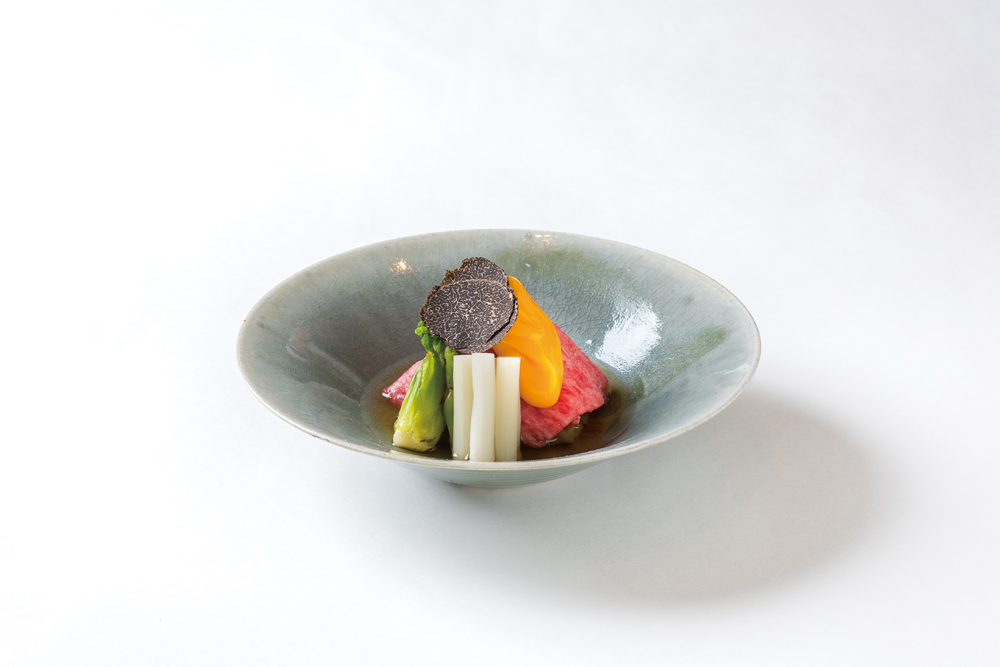
Whiting tokusa-age — conger eel yawata-age, rich dashi, myoga
This time, we learned about "fried dishes" from Instructor Sugai (Tokyo Kaikan Mitsubishi Club). We feature "tokusa-age."
DETAIL
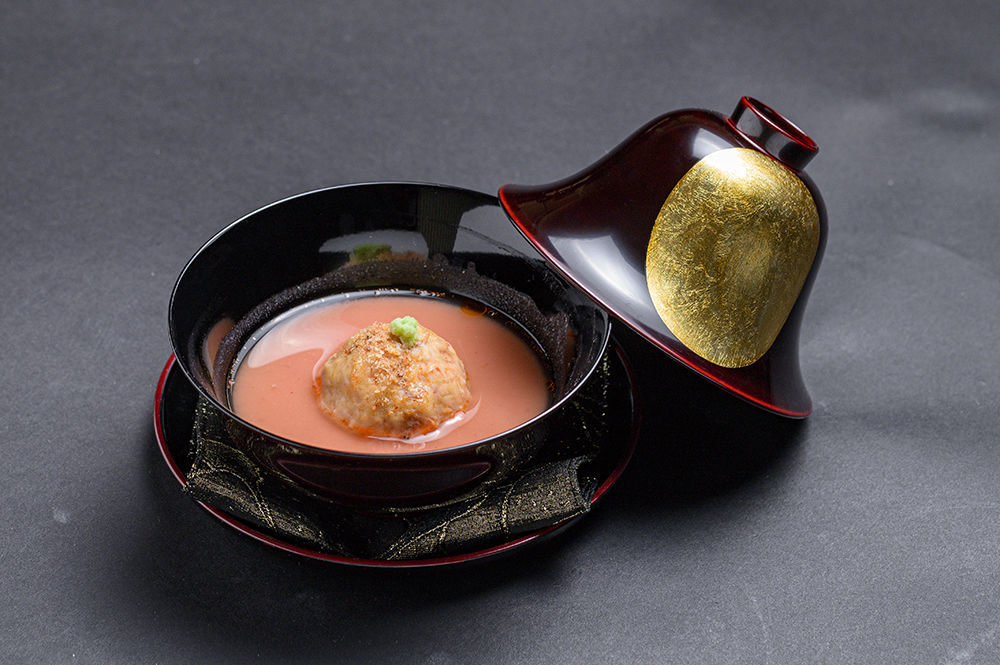
Salmon tawara-style deep-fried, grilled-eggplant batter, chrysanthemum achara pickle
In the tawara-age, besides onion and long onion, I also add taro, and this makes it come through much more clearly as Japanese cuisine. The sticky, glutinous texture is delicious, so I'd recommend it. This time, I make use of parts that can't be used as fillets — like the center bones and the meat around the tail — steaming them with a splash of white wine to remove off-odors and add aroma, then combining them with taro, onion, and long onion to make the tawara-age. It's served with a grilled-eggplant batter, a preparation also found in Turkish cuisine, and it's delicious, rather like a refreshing tartar sauce.
DETAIL
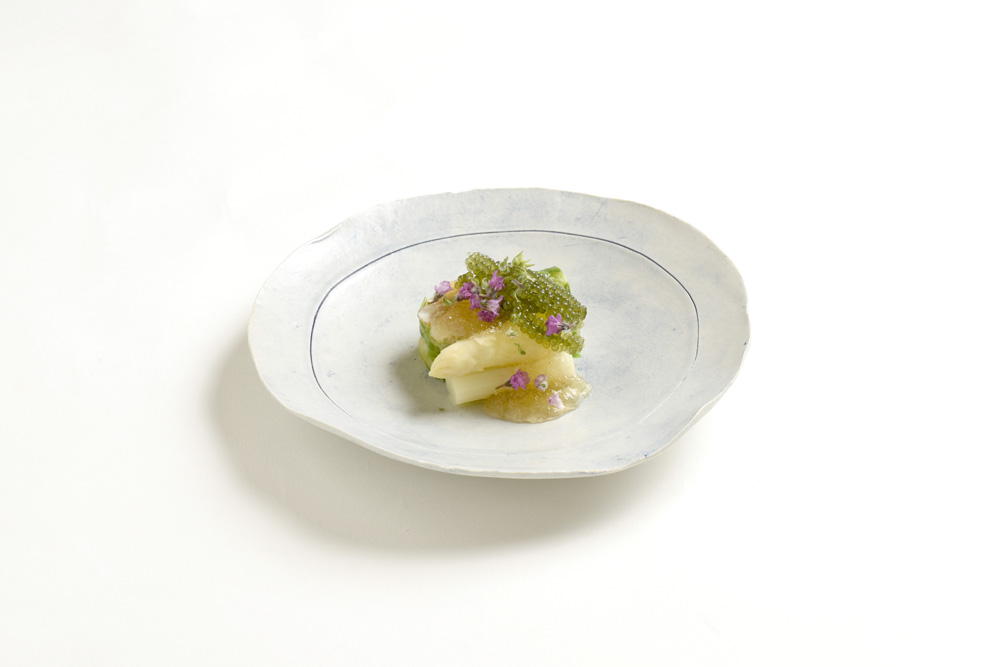
Salmon tatsuta-style deep-fried, fan-cut eggplant, chrysanthemum thin-batter fry, ginger salt, sudachi
This time, I learned about fried dishes from Instructor Sugai (of Tokyo Kaikan, Mitsubishi Club). I'm taking up the basic "tatsuta-age" here.
DETAIL
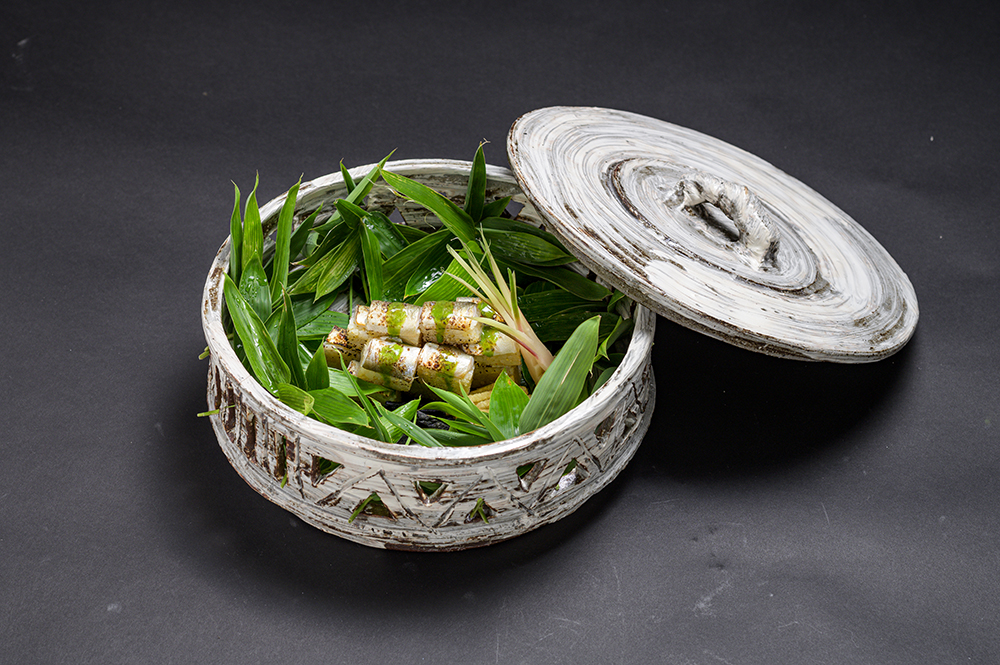
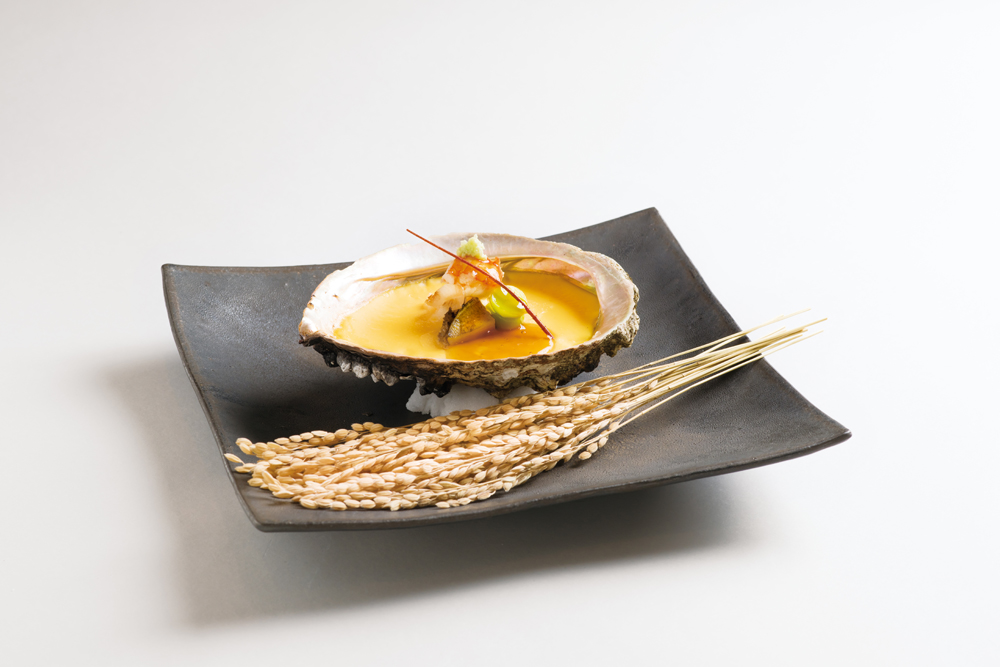
Finely scored abalone, clam with mugwort kuzu noodles and raw sea urchin, beach silvertop, udo
I made mugwort-flavored kuzu strips. I thought about whether I could make something that even guests who visit several times a month wouldn't tire of. With this method, by changing the ingredients placed inside and the seasoning, it can be applied across an appetizer, a soup ingredient, a sweet, and more. Making it by hand takes effort, but it lets you adjust to your preferred thickness and firmness, and freely choose the shape you cut it into, which is convenient. You pour the kuzu into a flow-mold pan and set it in a hot water bath; the timing for sinking it into the hot water is when the surface has cooked through and its color has changed. If you leave it as it is, the surface can end up rippling and it won't finish cleanly, so sink it into the hot water quickly and set it firmly all the way through.
DETAIL
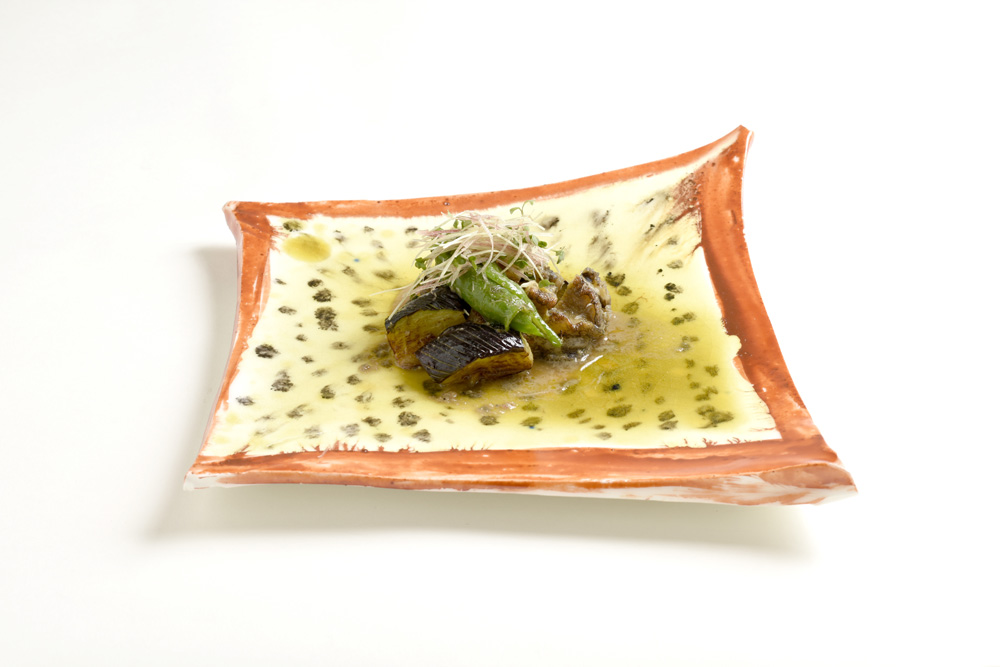
Soup bowl: okoze suppon-style, mugwort tofu, bamboo shoot, myoga, scallion, sansho flower buds
This time, I had Yūji Shimizu, who serves as head chef at the renowned restaurant "Nishi-Azabu Ichino" — which has also earned a Michelin star — introduce me to "yomogi-dōfu," a dish that has become a standard soup ingredient.
DETAIL
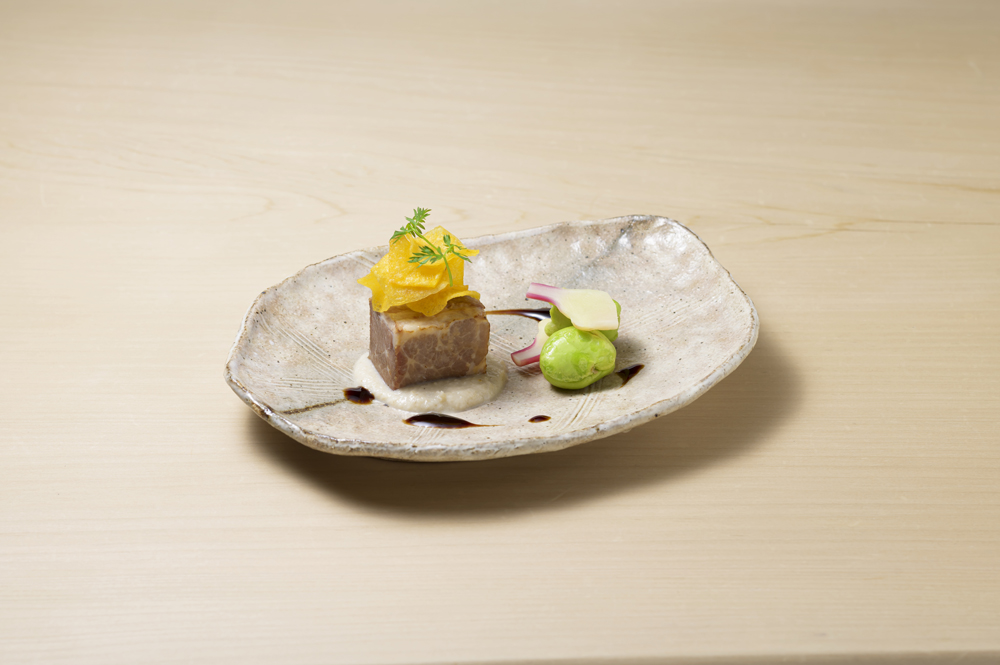
Kinka pork oil-simmered, fava bean terrine, vinegar-pickled ginger, potato senbei, burdock base, black vinegar tamari
Scallion oil is made by slowly heating finely chopped aromatic vegetables in low-temperature rice oil. Frying for about 15 minutes, until a good deep-fried color develops, lets the distinctive savory flavor of the aromatic vegetables transfer into the oil.
DETAIL
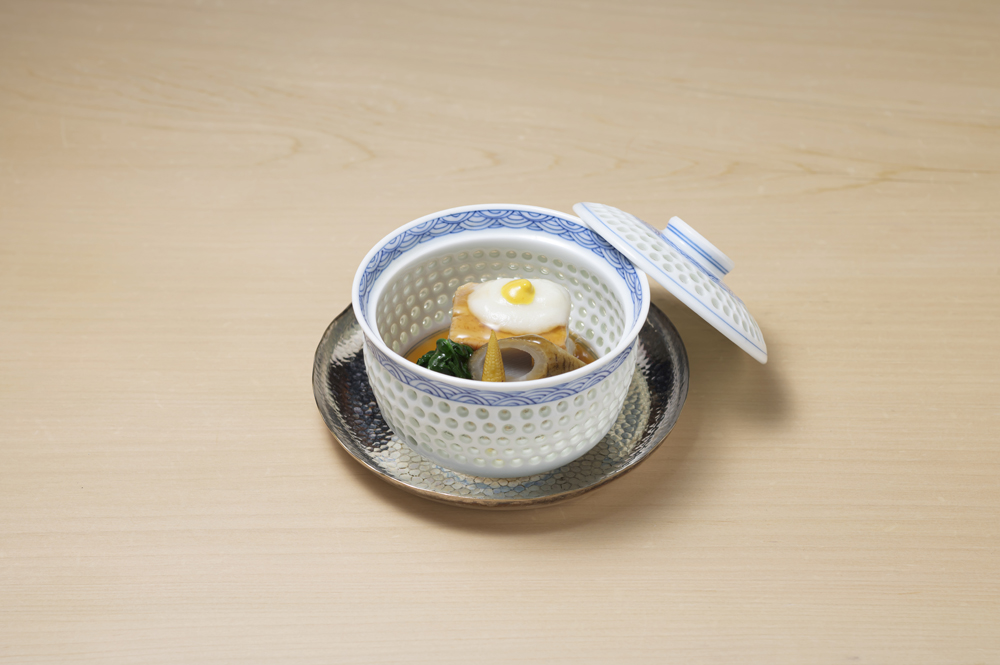
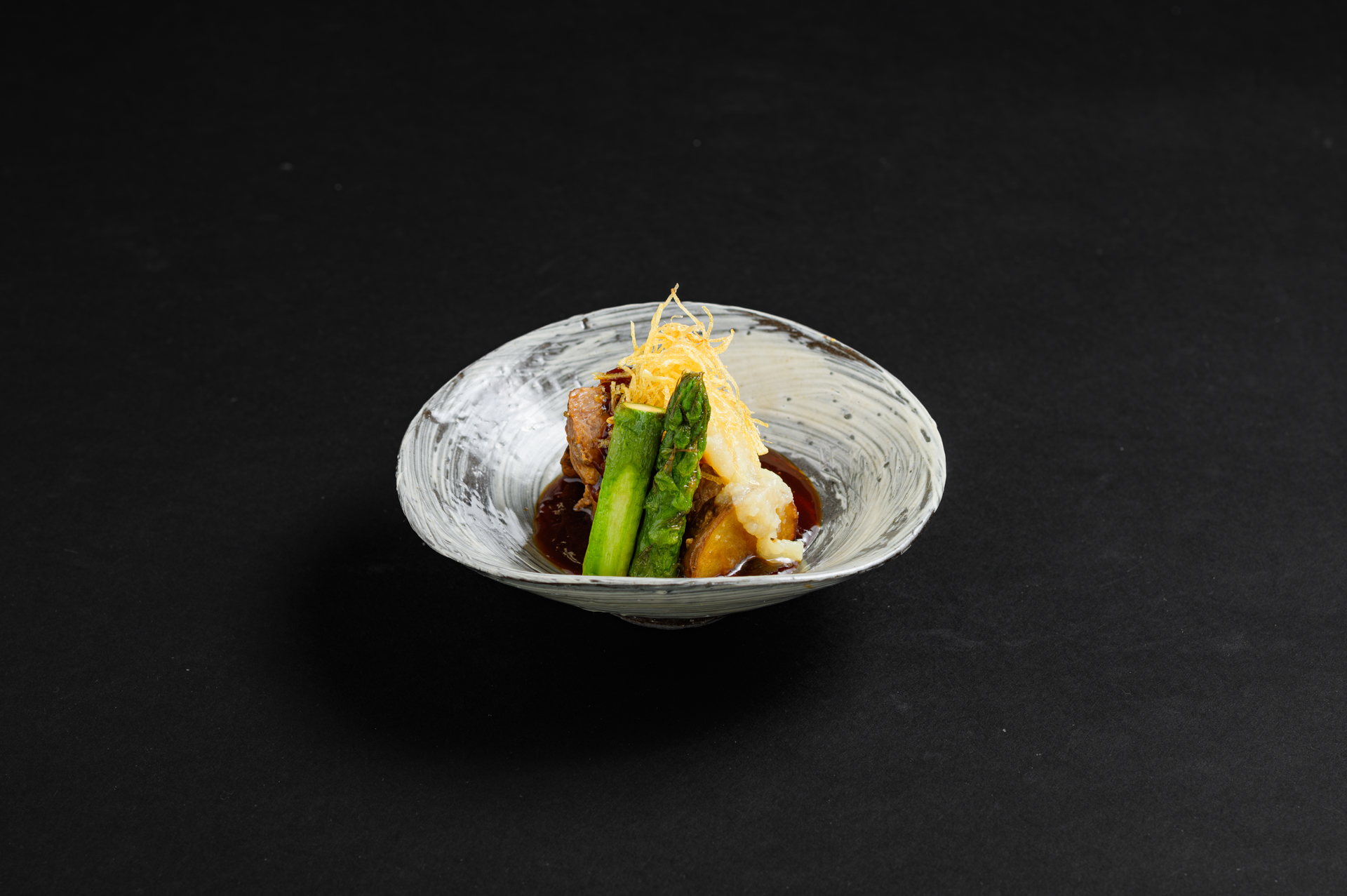
Takiawase: Kinka pork kakuni, potato sauce, new burdock, spinach, Japanese mustard
Kinka pork is a pig breed called "the phantom pig," characterized by a distinctive umami and richness. I place the meat whole, still in a block, into a mold, pack soy pulp around it, and steam it; the key point is to steam it with a weight placed on top so the meat doesn't warp. Doing this greatly reduces the wasted trimmings that would otherwise come from cutting it.
DETAIL
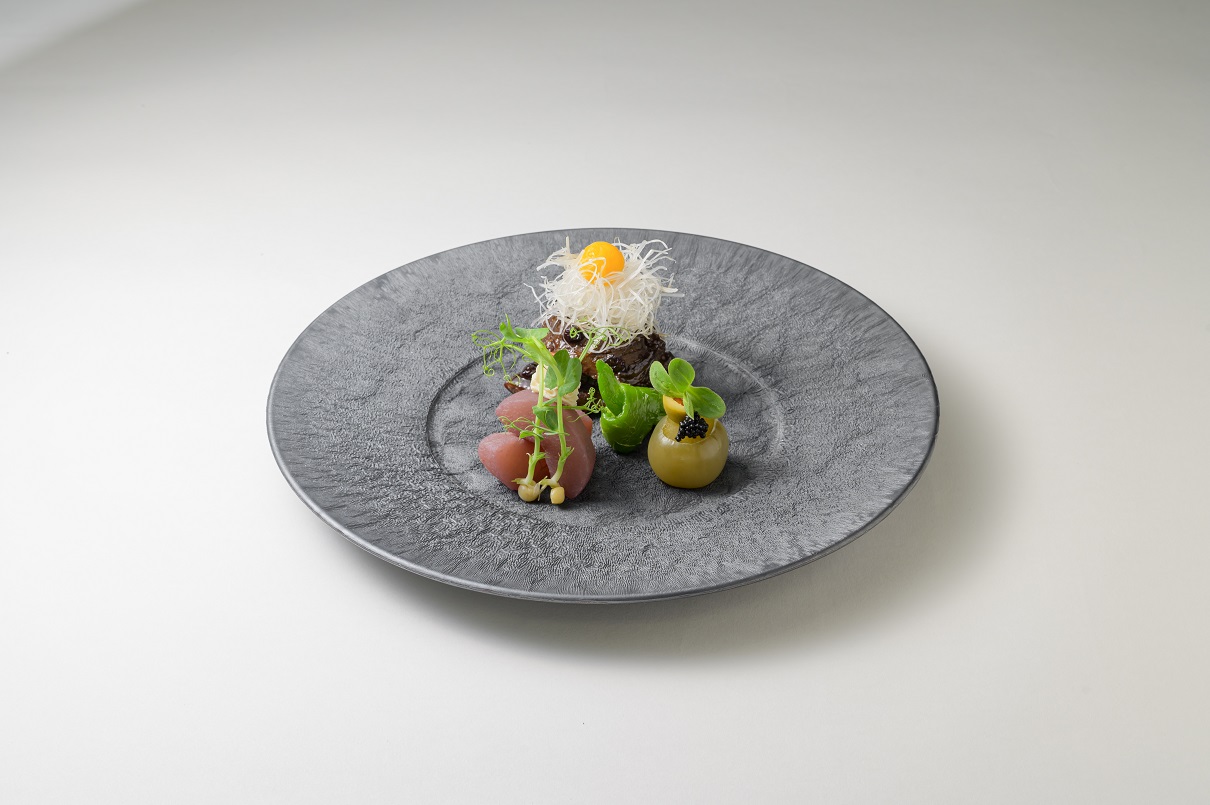
Yamayuri pork harami, fruit-miso grilled
I add blueberry and white peach to the miso bed, so the fresh sweetness of the fruit lets you enjoy the pork without it feeling heavy. For the accompaniments, I've assembled things with a good tartness, like pear simmered Kōshū-style, and a "cream shiro-zu" made using tangy ricotta cheese. For the "cream shiro-zu," straining drained tofu through a fine habutae-goshi sieve changes the texture from grainy to smooth, and makes the mouthfeel far better. It's a labor-intensive step, but it's important because it adds real value.
DETAIL
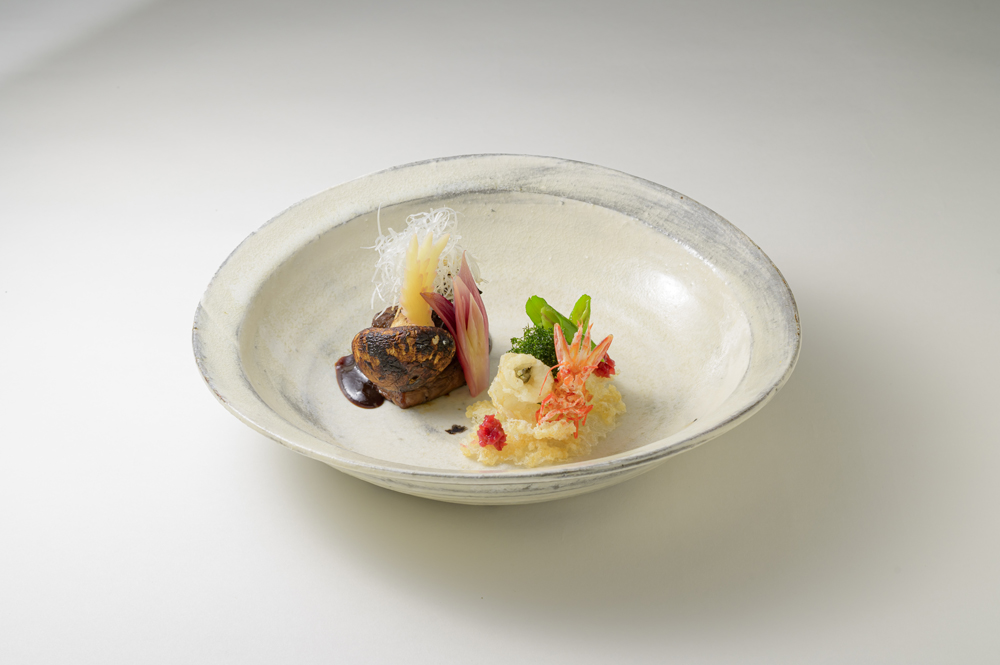
Yamayuri pork miso-marinated harami, grilled matsutake, pike conger senbei, rice porridge senbei, kuruma prawn senbei
The additional hearty course is a dish meant to be enjoyed with a drink partway through the course. This time, I devised a dish using delicious pork from Kanagawa Prefecture. I marinated the harami in miso, and by adding honey to the blended miso, the honey's sweetness — not the least bit heavy — brought out the umami of the meat. Also, by mixing minced shrimp into the rice-porridge senbei, I added the umami of crustacean, making it a dish that goes even better with sake.
DETAIL
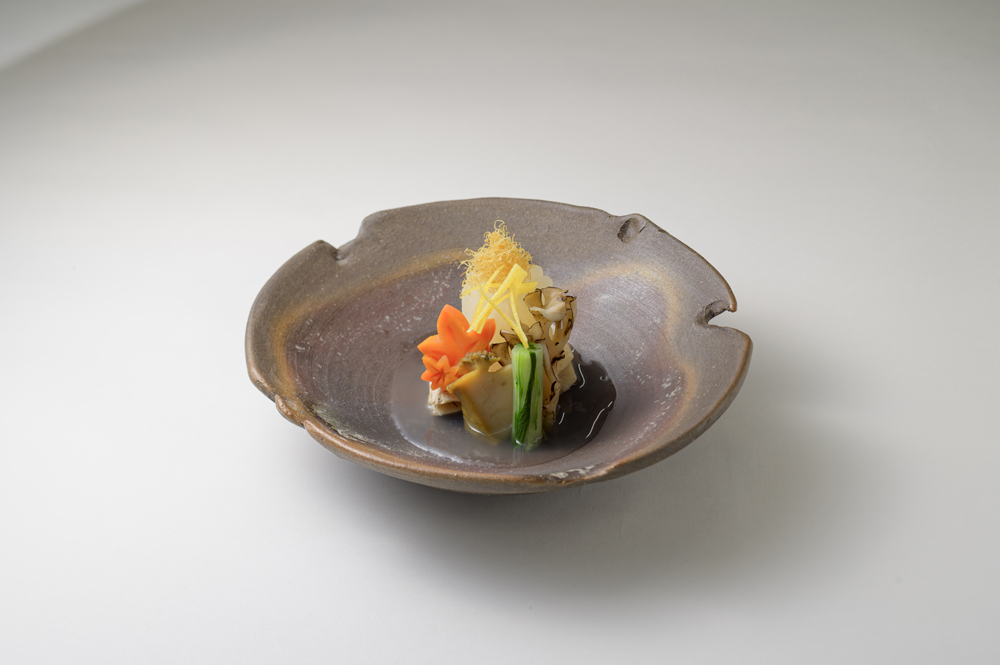
Salt-cured yellowtail and daikon, oil-simmered abalone, maple-leaf carrot, fallen-leaf mushroom, green garnish, finely shredded ginger, pine-needle-cut yuzu, a thickened sauce from its own broth
For the salt-buri daikon, salting the yellowtail heavily and letting it rest overnight draws out excess moisture from the flesh, removing off-odors while also seasoning it with just the right amount of salt. I regularly use yaki-dashi, a dashi made by grilling fish trimmings and bones; grilling the trimmings adds a savory aroma to the dashi, giving it a flavor with real punch.
DETAIL
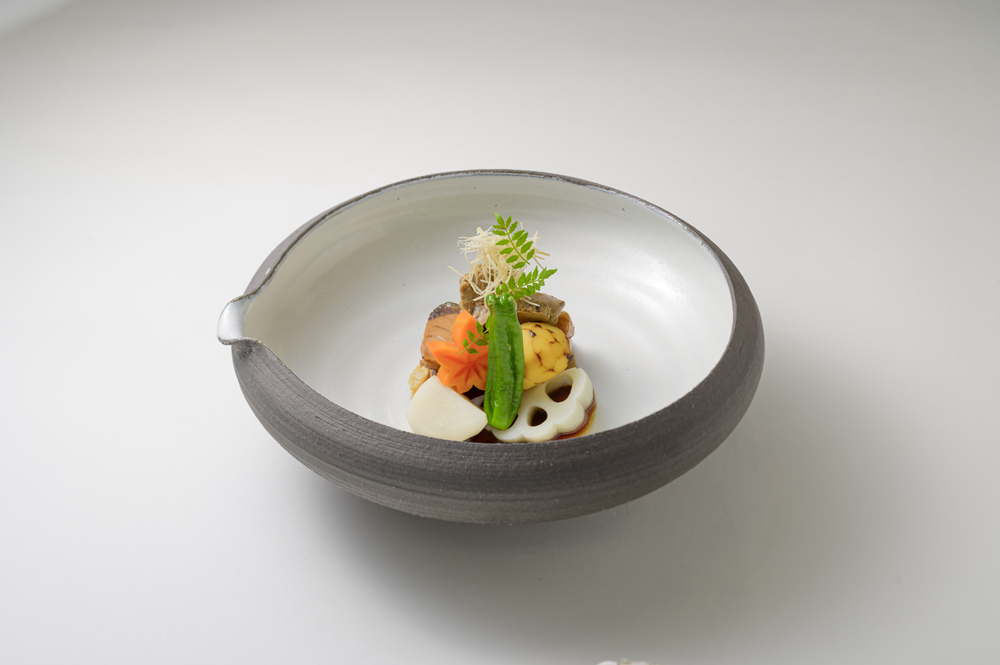
Yellowtail simmered to a glossy sheen, yellowtail liver, white-simmered turnip, chrysanthemum-cut lotus root, maple-leaf carrot, roasted chestnut, green chili, julienned ginger, sansho leaf
This time, I learned about the additional course from Instructor Mochizuki (of The New Okura). He devised a dish designed to catch the eye at first glance and make guests think, "That looks delicious!"
DETAIL
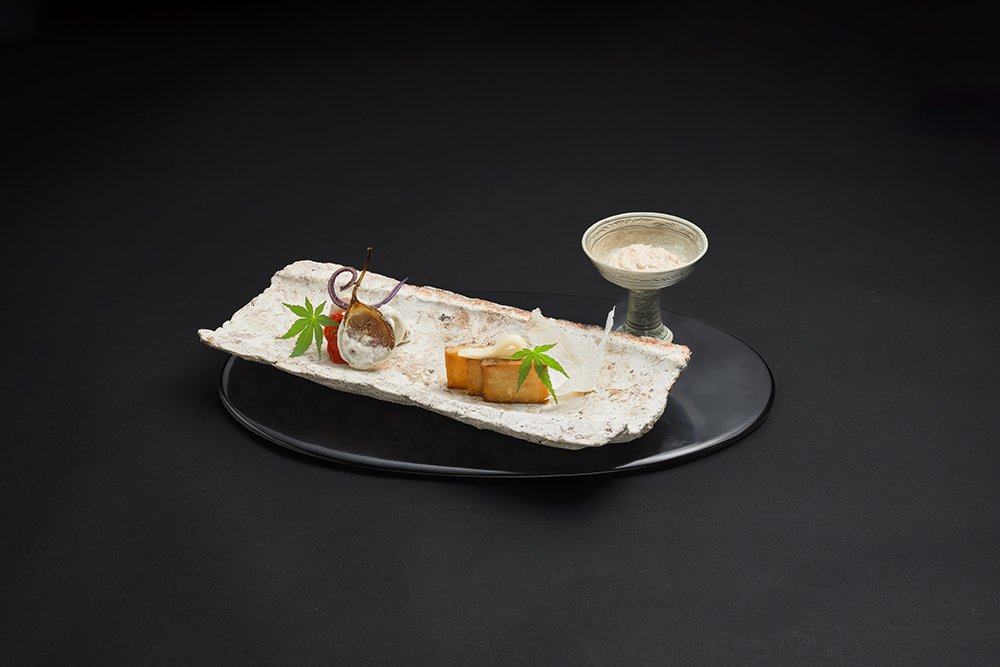
Sushi, sushi, sushi, sushi — the incoming boat, the outgoing boat
As an innovation for the rice course, I devised this from chirashi-zushi. Between layers of sushi rice, I press in dry-roasted items — dry-scrambled egg, ground dried pickled plum, karasumi, matcha, and the like — pressed into five layers, adding them both for visual beauty and as an accent of flavor. I wanted to propose a meal to be eaten by hand rather than with chopsticks. It takes the form of using a dried sheet of baby sardines in place of sushi nori, wrapping sushi rice dressed with sesame paste and whatever topping you like, seasoned with wasabi-soy sauce, around it, to be eaten by hand. The sushi rice is pressed half-and-half with rice that has butter mixed in, and I think the aroma of the melted butter matching the vinegared rice makes this enjoyable for anyone, regardless of age or nationality.
DETAIL
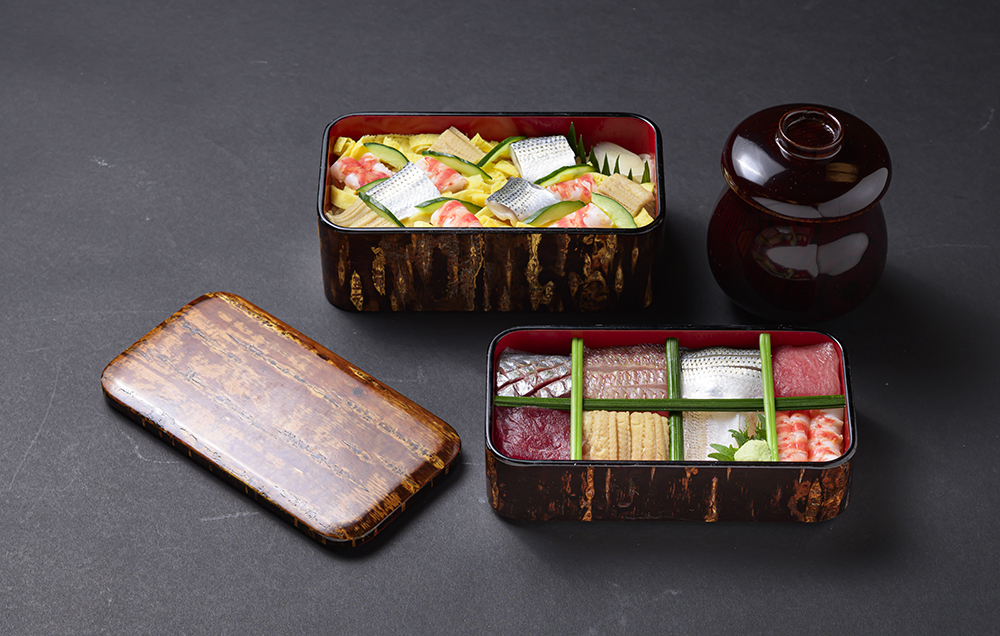
Chirashi Sushi
This time it's chirashi sushi, the fundamental rice course. For this sushi rice, I wanted a pronounced vinegar aroma, so I make the sushi vinegar with a fragrant red rice vinegar. This time, by plating the tuna, sea bream, whiting, horse mackerel, and other items on a separate plate, I've added a different kind of enjoyment and changed up the visual presentation.
DETAIL
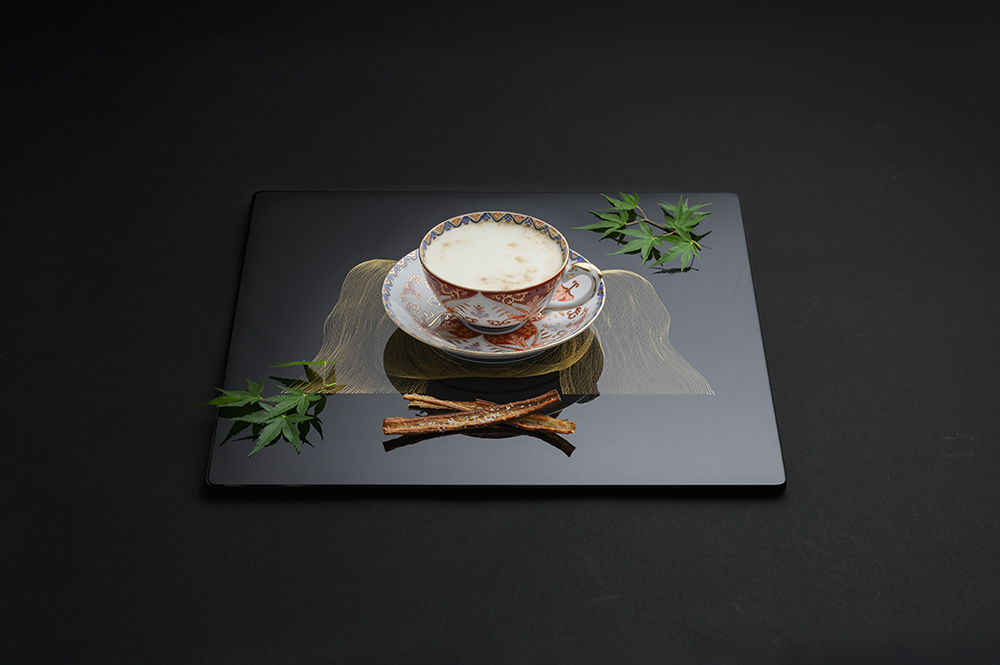
Crimson-Fuji Inaniwa udon, cloud-white abalone, tempura bits, aromatics
So that it's clear the tanuki — the shape-shifting trickster of folklore — has transformed itself into Crimson Fuji, I scattered tenkasu, the fried batter bits left over from frying the abalone that are also nicknamed 'tanuki,' around the udon shaped like Mt. Fuji. It's a dish I'm happy to serve if its playful spirit comes across. For drawing the dashi, I used dried barracuda from Toyama. Barracuda has a strong aroma as well as strong umami, so it really lifts the flavor of the dashi. Red-core daikon is normally used from spring through summer, in salads or grated, but I thought about whether I could put this color to some use, and I've likened it here to Crimson Fuji. Its clean, refreshing flavor doesn't get in the way of the udon and pairs very well with it.
DETAIL
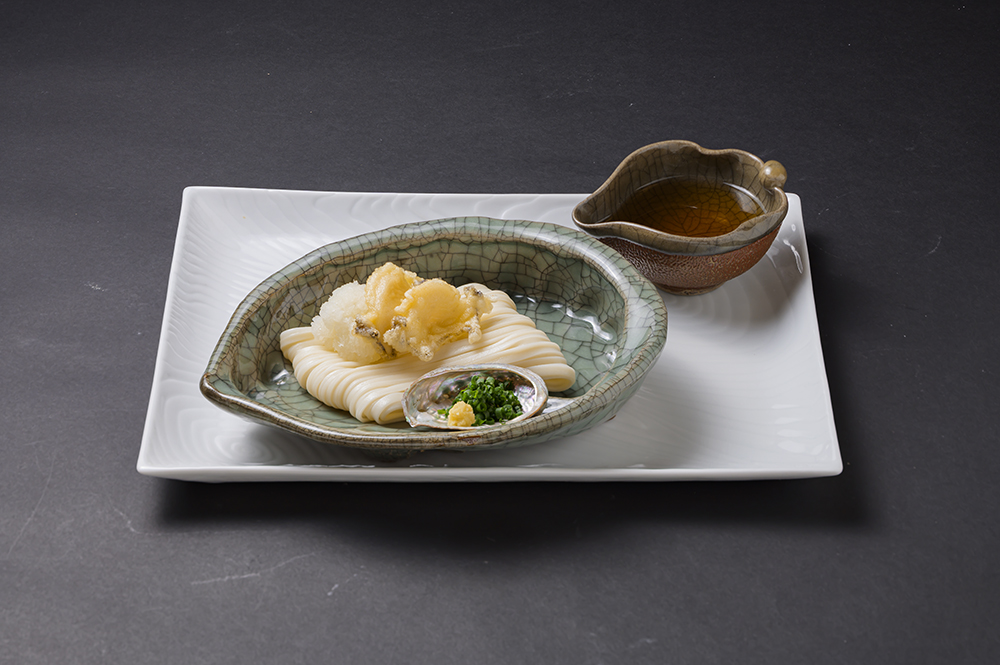
Abalone tempura, Inaniwa udon, grated daikon, aromatics
This time, the basic rice course is 'Inaniwa udon.' We have guests eat it simply, with grated daikon and aromatics, but the temperature and time used when drawing the dashi are important. If you put kombu in water and leave it over heat for more than 30 minutes, it releases sliminess and clouds the dashi, and if you leave katsuobushi shavings in for more than 10 seconds, the flavor turns heavy, so take care. When drawing dashi with katsuobushi and kombu, be sure to fully cook off the alcohol in the mirin. Doing so produces a dashi that anyone can drink and enjoy, likes and dislikes aside. The abalone is removed from its shell, cut into eight pieces, and deep-fried in a tempura batter coating. The oil brings out the abalone's sweetness.
DETAIL
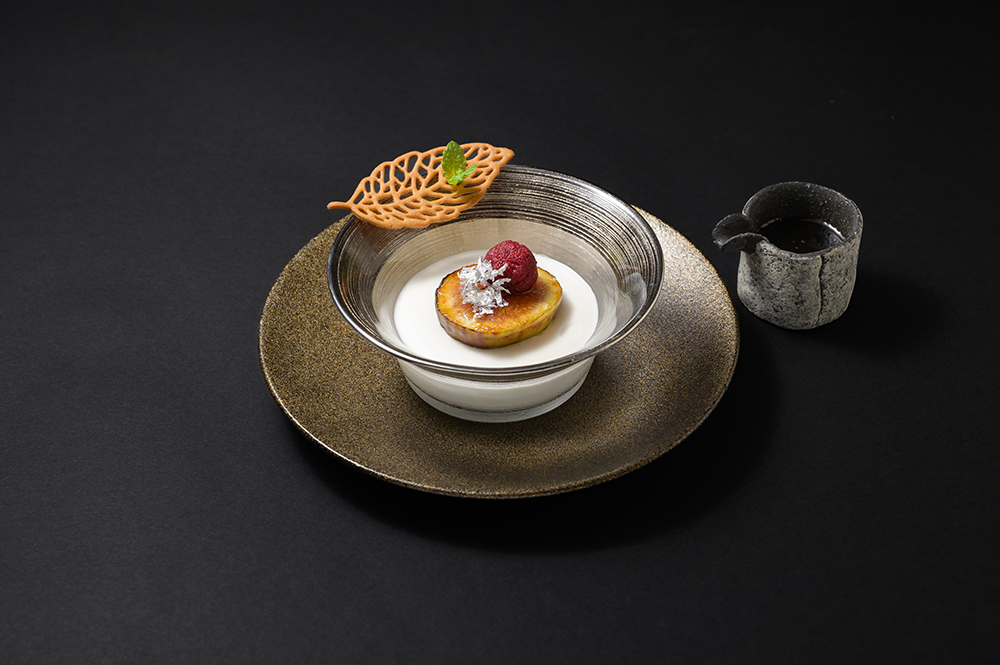
White sesame blancmange (grilled fig, Japanese bayberry, lotus root crackers, black sugar syrup)
I made this dish centered on sesame and other Japanese ingredients, based on 'blancmange,' a dessert born in France. Since it's traditionally made with almond milk, to get closer to the savory aroma unique to almonds, I added the sesame milk introduced in the basic professional recipe 'White Sesame Mizu-Yokan,' giving it that same savory depth. The lotus root cracker served alongside the blancmange was made using a mold sheet meant for baked confections. This time I used grated lotus root as the ingredient, but depending on the season it could also be made with lily bulb, chestnut, arrowhead tuber, and various other vegetables, which I think can help express a sense of the season and add variety in flavor as well. I've also garnished it with fig caramelized with cassonade.
DETAIL
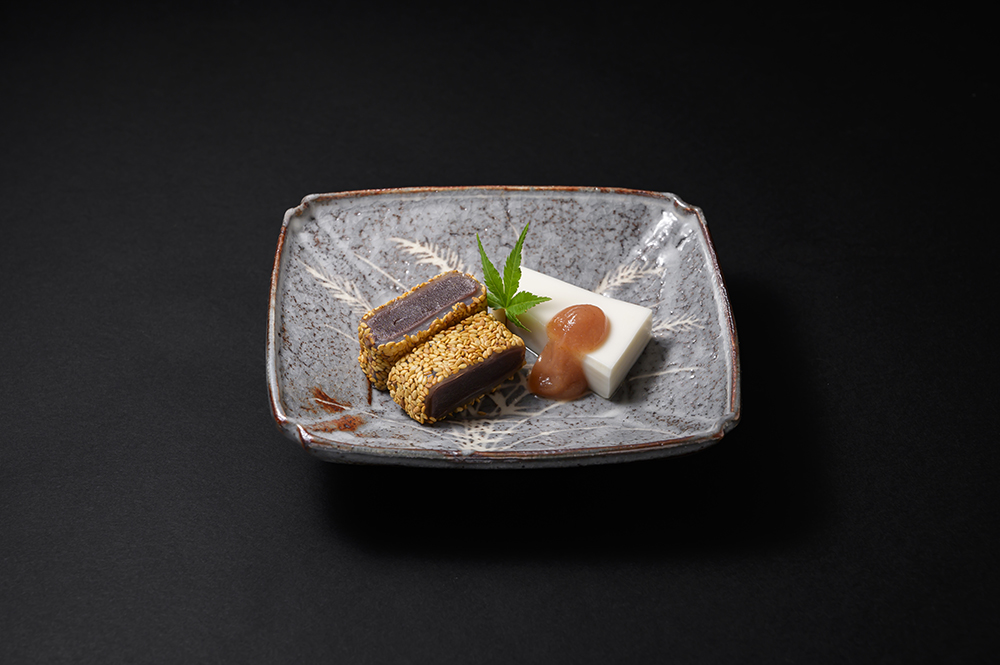
White sesame mizu-yokan (fig purée, strained red bean paste, kuzu-starch noodles, toasted sesame)
This confectionery technique is one I learned from Mr. Oguma, who has looked after me since I was young. It was a mizu-yokan (a chilled, lightly set sweet, usually made with azuki bean paste) I loved very much from the time I was allowed to help prepare it. This time I used fig, a summer fruit, and finished it in a way that brings out the ingredient's own flavor as much as possible, making it into a purée poured over the top. This time I took confections made with sesame as my theme. When people hear 'mizu-yokan,' they tend to picture one made with dainagon azuki beans, but since I wanted guests to finish the meal with something light and refreshing, I made this a dish that conveys sesame's rich flavor. Carefully extracting the sesame milk is the key point.
DETAIL
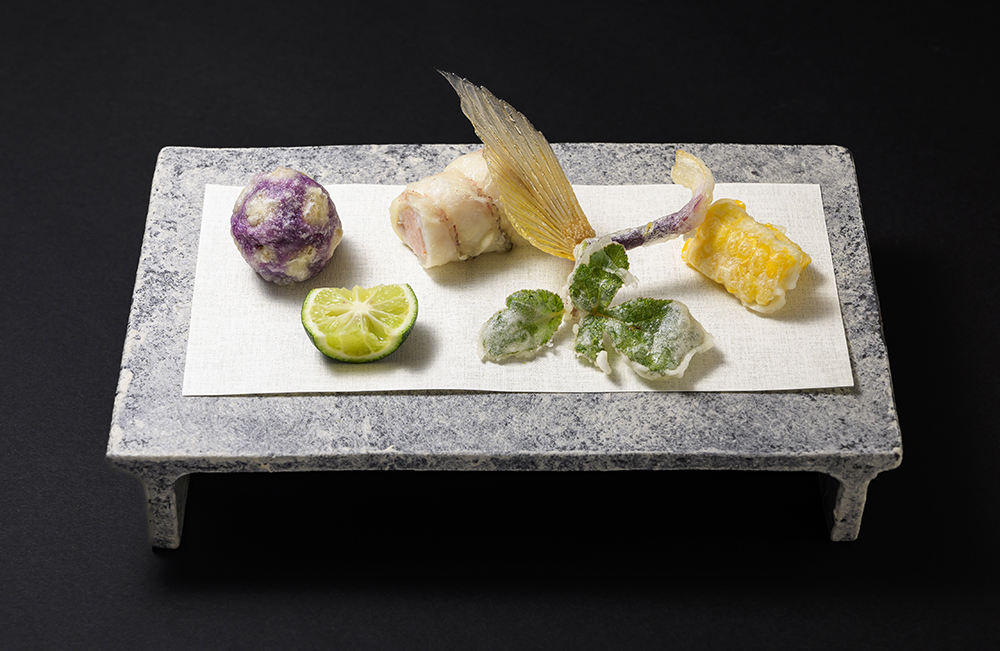
Tilefish twisted-rein fry, potato manju, corn, beach silvertop, sudachi, sansho salt
I present a tazuna-age that makes the most of the beauty of the tilefish's skin. For the core, I use a shrimp shinjo made from kuruma prawn, aiming for a synergy of deliciousness by layering the umami of kuruma prawn on top of the umami of tilefish. The potato manjū is made by rolling together a purée of purple sweet potato and potato, with walnuts, toasted to add a savory aroma, added in as a textural accent. I think the different texture and aroma of the walnut amid the rich, mellow potato is enjoyable and fun.
DETAIL
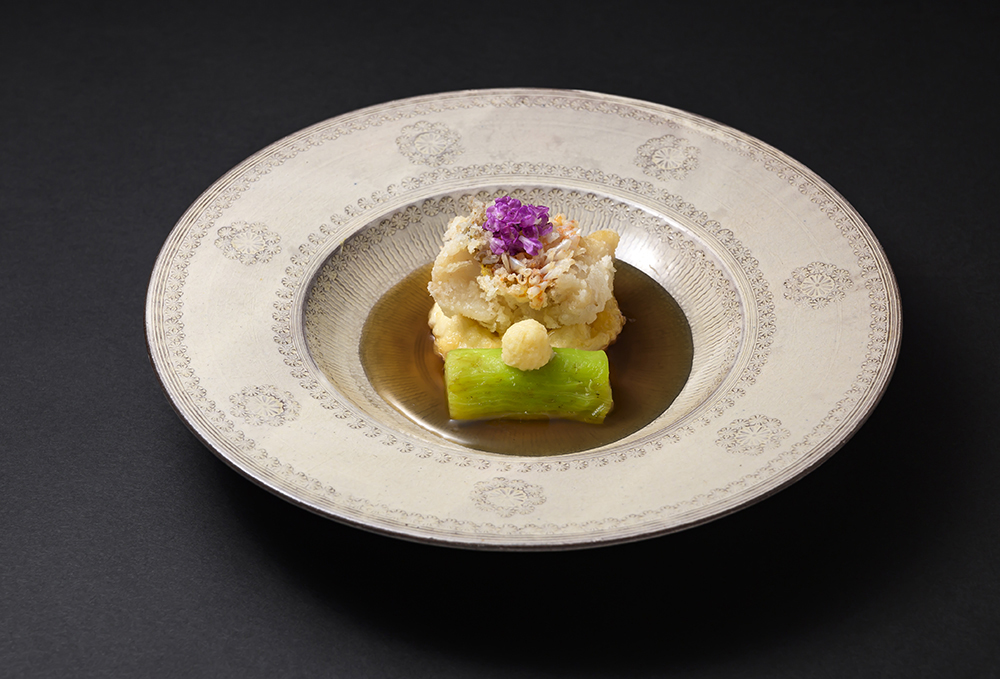
Tilefish fried in its own scales, grilled eggplant, mogusa ginger, fried fresh yuba, shiso flower spike, thickened seasoned dashi sauce
This time, within Japanese cuisine, a proposal from head chef Honda (Ginza U Noki) on the basic dishes of fried food. In cooking, scales are, in principle, removed before a dish is served. An 'uroko-age' like this one could be considered an exception, but it's also a classic. The fresh yuba is gathered into a chakin bundle shape to settle its form before frying, and since it keeps the flavor of the soy milk firmly while turning out light and fluffy-soft, I think it's delicious with a different kind of texture. The contrast and interplay between that softness and the crisp texture of the uroko-age is the key point of this dish, and that texture has been very well received.
DETAIL