
Read the article: Five-color namasu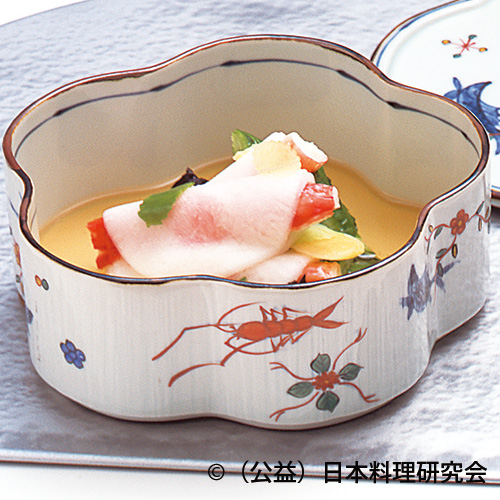
FREE
Five-color namasu
Last is the vinegared course. For the five-color namasu, king crab is at the center, wrapped in Shōgoin daikon on the outside. Kintoki carrot cut…
Crustaceans
FREE
Last is the vinegared course. For the five-color namasu, king crab is at the center, wrapped in Shōgoin daikon on the outside. Kintoki carrot cut…
Fujikyu Group
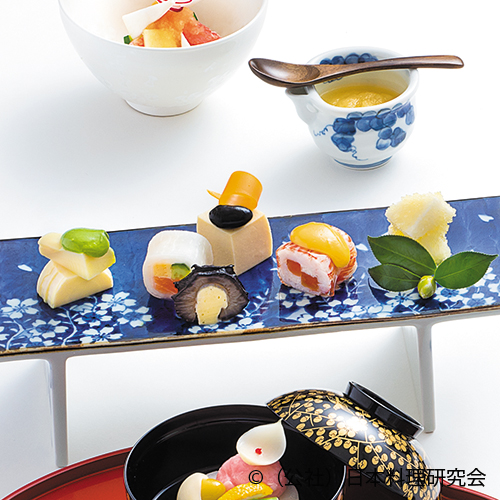
These are the appetizers. For the kinko (a traditional dried sea cucumber) and scallop fish-paste dumpling wrap: when I was young I was taught to…
Nadaman Guest House, Shinjuku
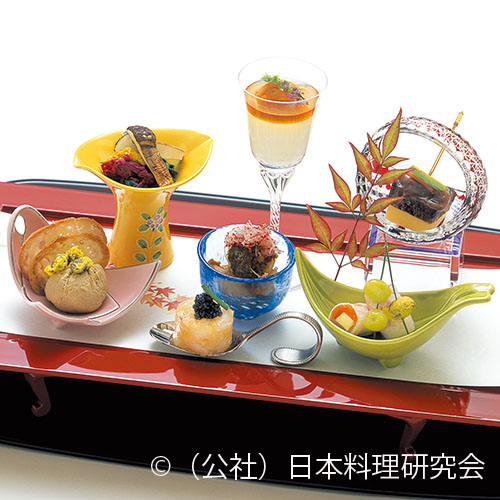
This is the seasonal-vegetable course. We'll go through it in order. First is the grilled matsutake steeped with chrysanthemum petals. We simply boil…
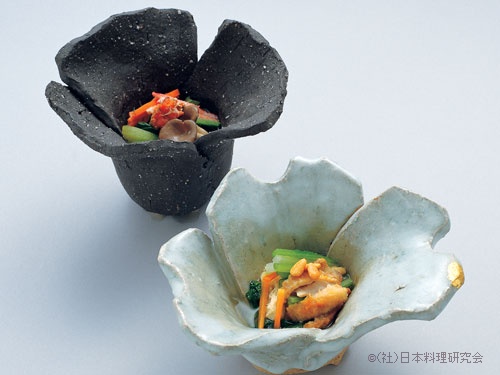
Komatsuna is also called winter greens, and it becomes sweeter and more delicious once the frost has fallen. The komatsuna sold today is a hybrid…
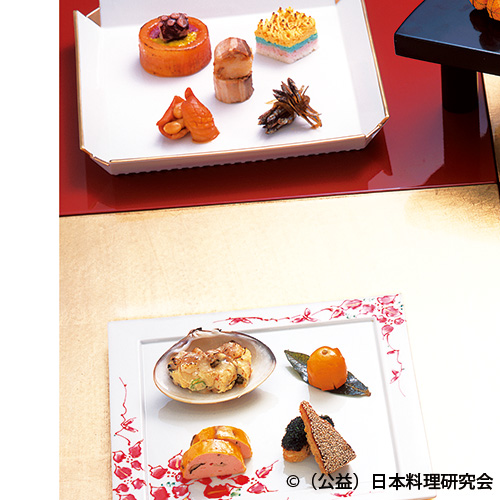
Kumquats simmered in honey: since kumquats with their leaves attached turn bitter, they are first left overnight, leaves still attached, in a fairly…
Yaesu Kappo Shimamura
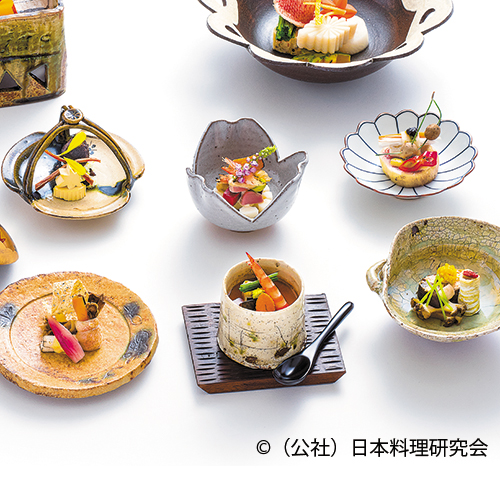
This is a six-item small-bowl course. The salt-cured pork thin-skin roll: the method for making the salt-cured pork was based on Okinawa's sūchikā…
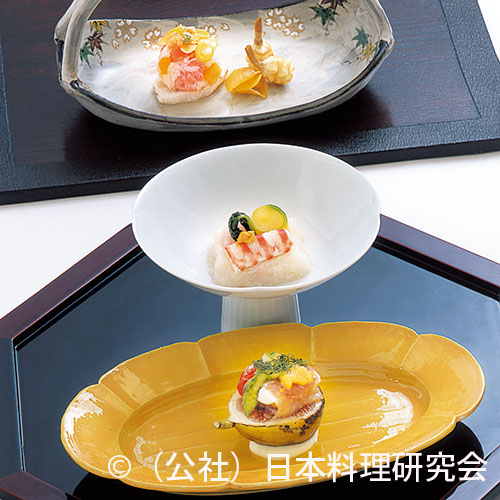
These are the three savory drinking snacks. For the turnip set in dew-and-frost jelly, since I named the course 'When the First Frost Falls,' I used…
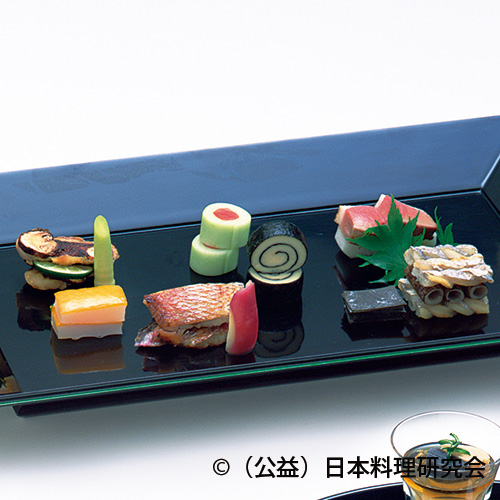
Ginza Kappo Risen
The tachiuo tazuna-yaki: weave the tachiuo into a rein shape, sandwich burdock inside, and salt-grill it. The squid kimi-yaki: salt bigfin reef squid…
Noboru Yamamoto
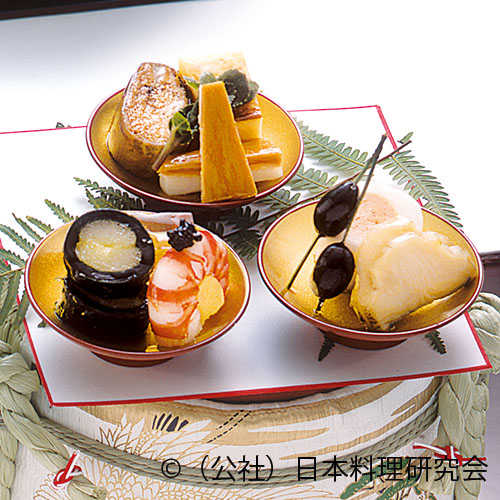
This is the celebratory tray course. For the noshi abalone, abalone that has been steamed until tender is folded and pressed firmly for a while, then…
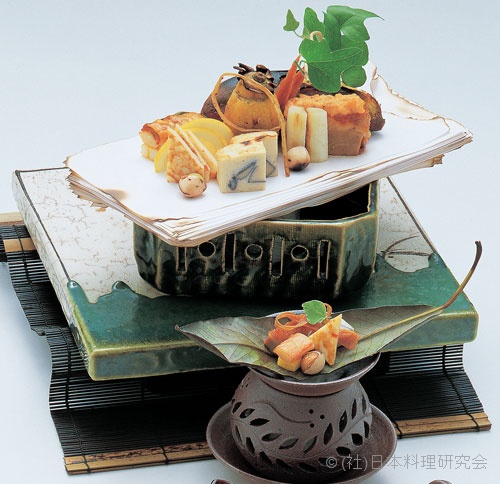
As for the stone-wall-style grilled shinjo among the grilled dishes: we peel Ishikawa taro, a satoimo cultivar, coat it in squid ink, and let it rest…
Daimon Kappo Miyamoto
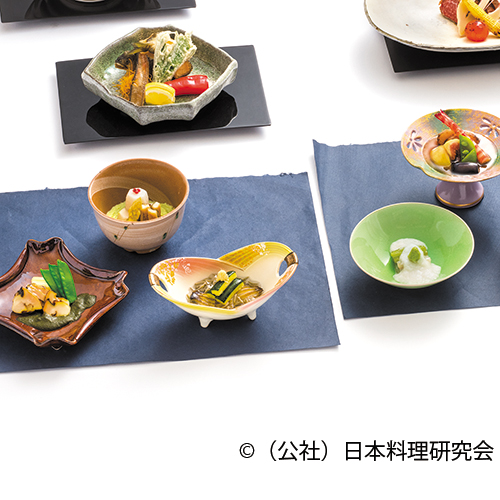
This is the sakizuke course, an appetizer. The fig is peeled of its thin skin and steamed briefly to soften it. The eggplant is deep-fried in oil…
Tsuburano Shinjuku Gyoen branch
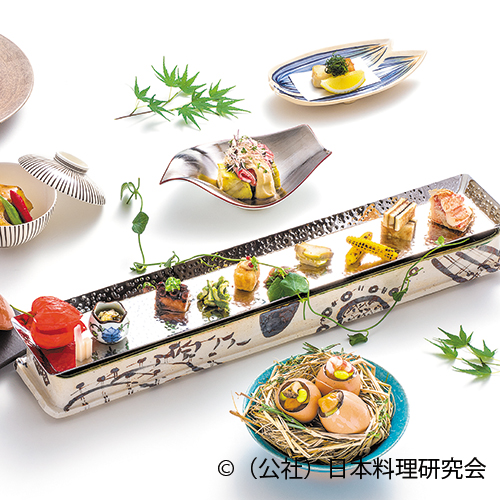
For the picked horsehair-crab meat, we boil the crab in roughly 2% salted water for about 20 minutes, turn off the heat, let it stand for ten…
Makuhari Hotel The Manhattan Japanese Restaurant Origin
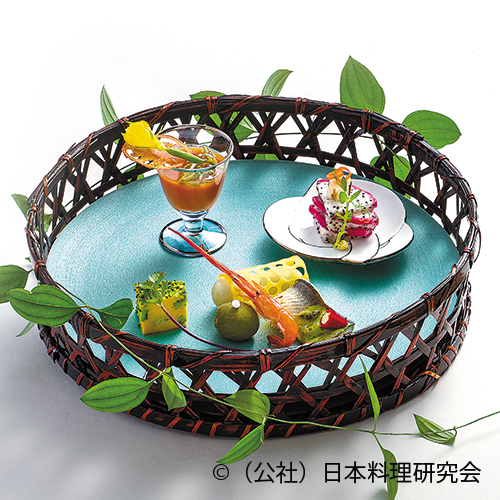
This is the appetizers course. For the tomato jelly, we use tomato juice brought in from Iwamizawa, Hokkaido. The ratio is 1g of French gelatin per…
Chefs Association
Yoshiaki Sato
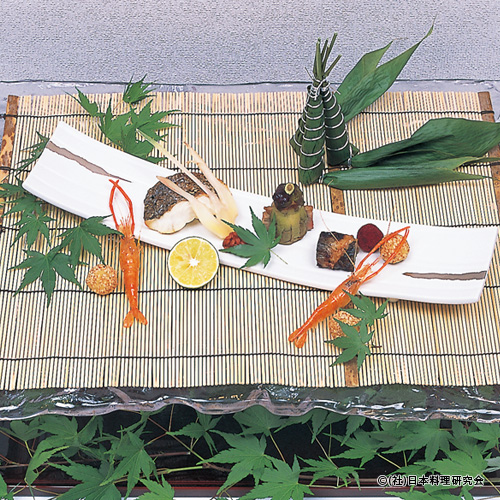
And thinking of bamboo shoots in the spring hills and fields, we have the bamboo shoot and fat greenling grilled with sansho leaf. Cogomi rikyū-maki…
Daiwa Exceed Co., Ltd.
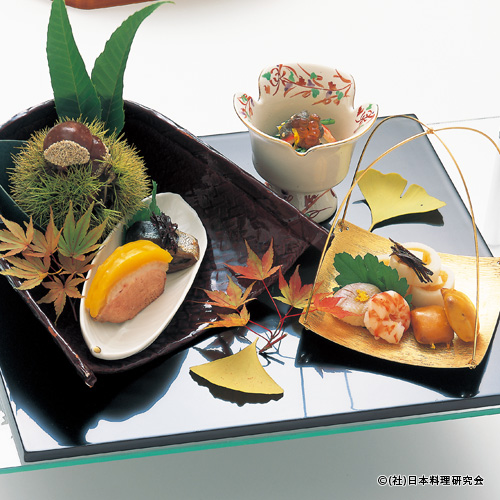
For the Pacific saury (sanma) simmered with shiso: first the head, fins, and scales are removed from the saury and it is cut into chunks. It is then…
Japanese Chef Kyoyukai
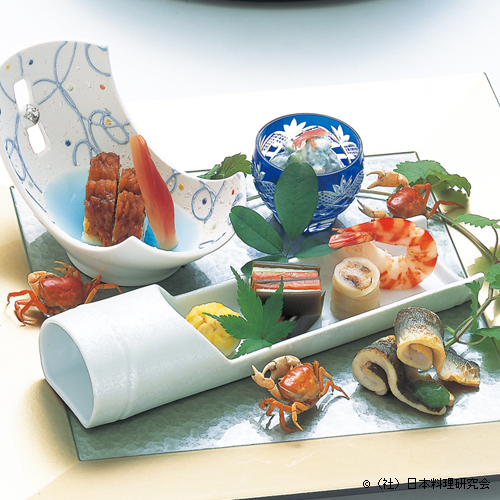
For the glazed simmered river crab, deep-fry the river crabs plain. Frying them at a slightly lower temperature, around 150°C, is good because it…
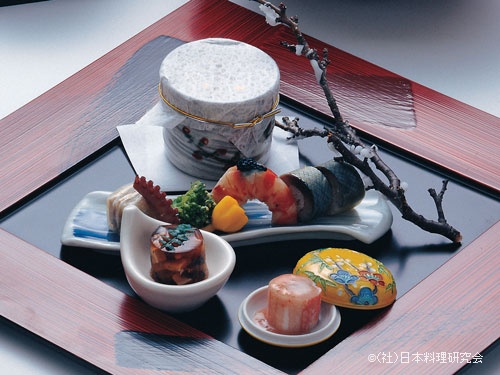
For the appetizer course's foie gras chawanmushi, the foie gras is broken up into pieces before being used.
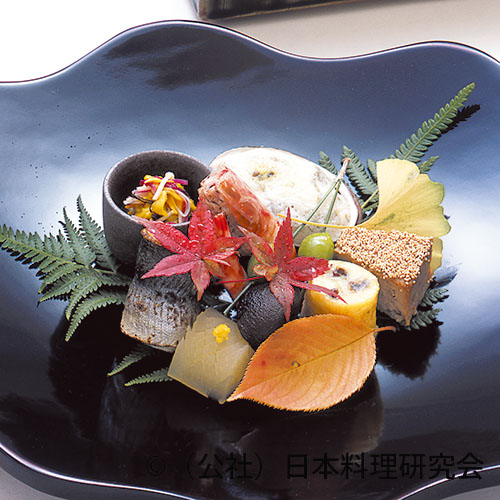
This is the appetizer course. The "harako" in saimaki prawn harako-yaki refers to roe or ovaries. Since it's the season for salmon roe, whether…
Omotesando Japanese Cuisine Keyaki-tei
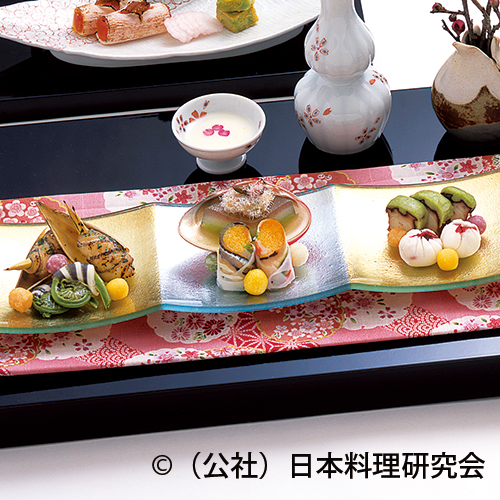
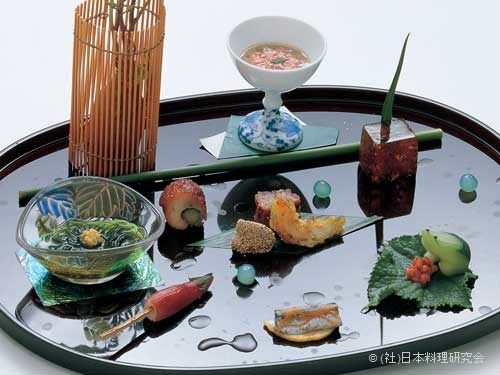
The 'Sound of Rain' appetizer platter (Amaoto no Zensai) is an appetizer that expresses the June season through rain, green, polka dots, paper…
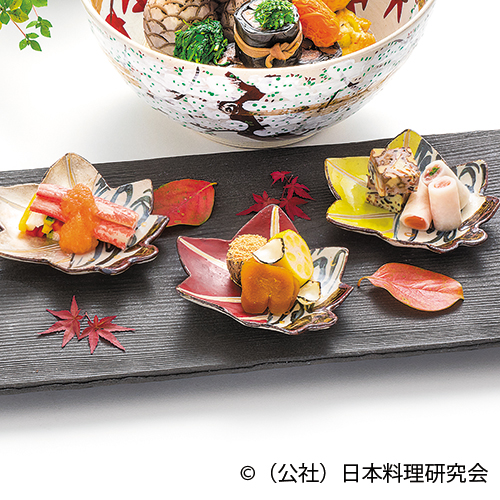
Starting with the appetizers. For the snow crab dressed with grated carrot and daikon, the crab is boiled in salted water and removed from the shell;…
Izu Nagaoka Onsen, Kameya Keian
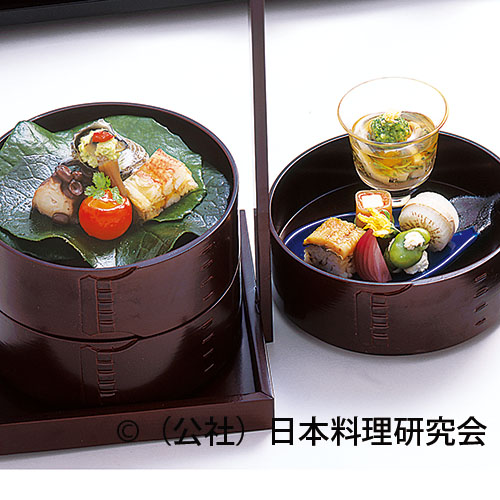
This is the appetizer course, plated on a leopard plant leaf. For the small turban shell dressed with jinda, sweet egg-yolk miso and olive oil are…
Ginza Kasuga
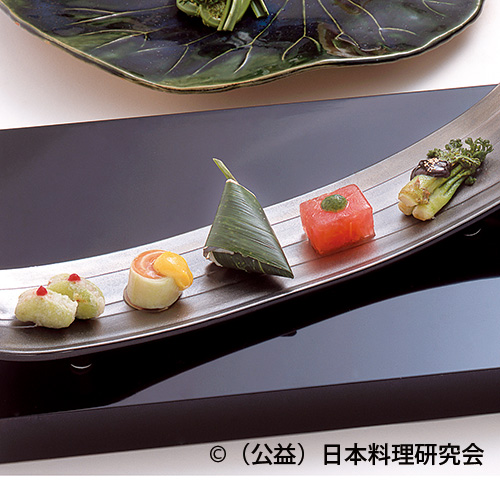
For the fava bean and shrimp sandwich fry, fava beans — an early-summer ingredient — are peeled and split in two, dusted with flour, and sandwiched…
The Westin Tokyo Japanese Restaurant Mai
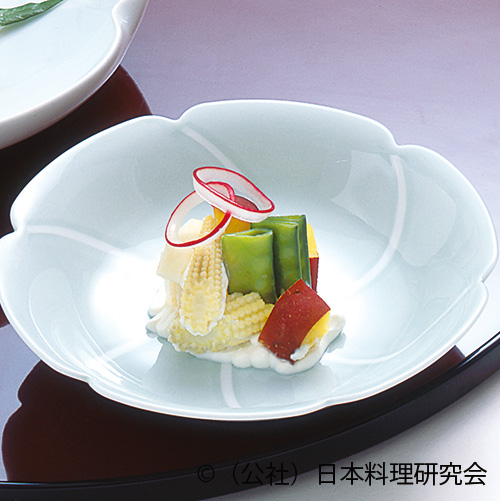
For the grilled eggplant dressed in shellfish bisque, shrimp and crab shells are roasted until fragrant, then brandy is added to carry that aroma…
Showing 24 of 515