Read the article: Tempeh and Mibuna
Tempeh and Mibuna
Shokuyo cuisine — called macrobiotic in the West — doesn't mean giving up fish and meat; it means eating in balance. We also make it a basic…
Vegetables & Fruits
Shokuyo cuisine — called macrobiotic in the West — doesn't mean giving up fish and meat; it means eating in balance. We also make it a basic…
Rokusaburo Michiba
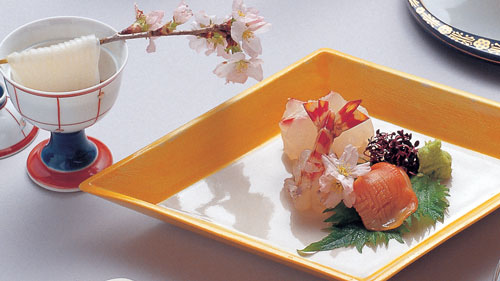
Sakura-chaya was founded in Showa 8 — 1933 — and is the third-oldest established ryotei, a traditional Japanese restaurant, in Mukojima, a district…
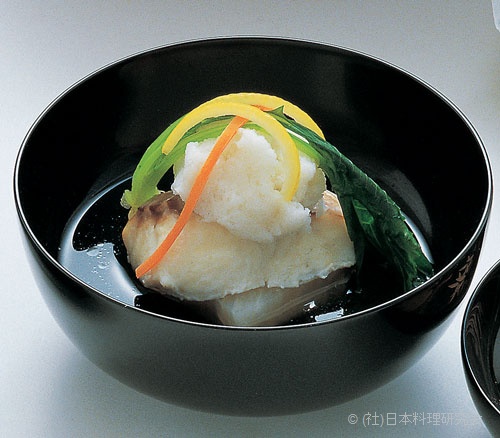
Tsukiji Tamura
This is the square-cut turnip in the clear-soup course. Cutting turnip into squares leaves trimmings around the edges, so we grate those trimmings…
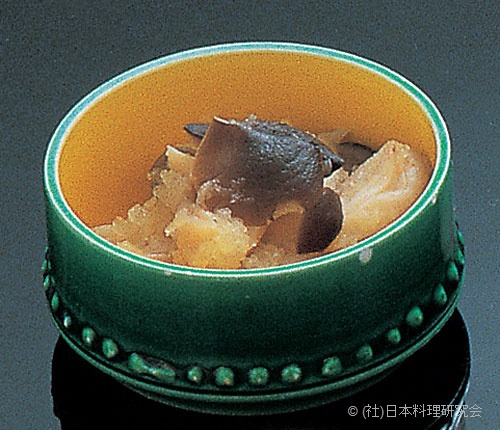
Tsukiji Tamura
(Looking back on the year with delicacies of the twelve zodiac animals, over a drink — all of it gentle on the body and low in calories.) We began…
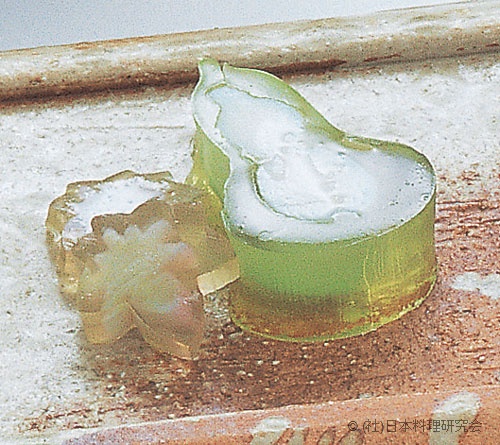
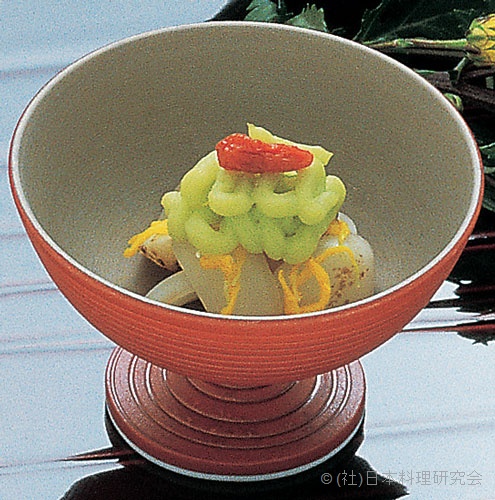
The gourd-shaped taro set in mint gelée doesn't match the season for this shape, but we made it into an attractive hyōtan (bottle-gourd) form…
Kioicho auspicious
Think of the lily bulb and ginkgo nut salad as a variation on zunda-ae (mashed-edamame dressing). We salt-steam the lily bulb, let it absorb a thin…
Kioicho auspicious
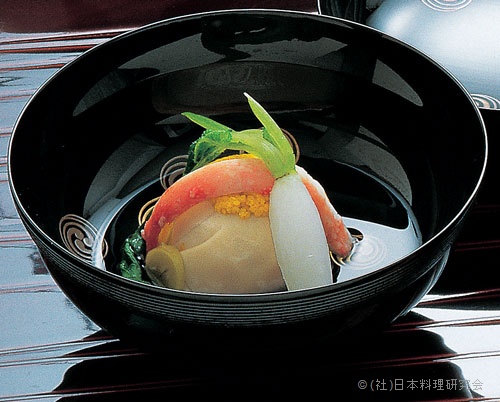
The clear-soup course is quail shinjo. Quail alone has a slight gaminess, so we combine it with ground chicken and add a small amount of sansho…
Uenoikenohata Kaien-tei
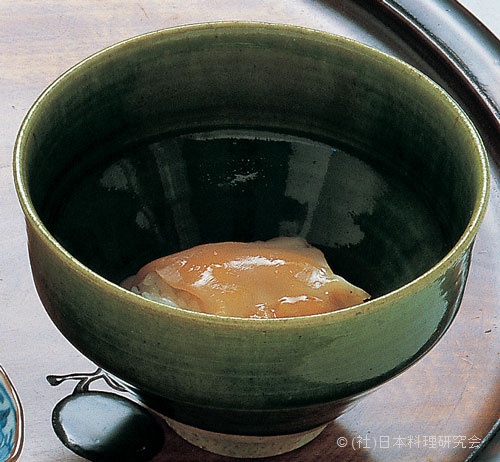
For the appetizer of clam steamed sticky rice with a konowata drizzle, we soak glutinous rice in kombu dashi before steaming it, then, while it's…
Akasaka/Akasaka Hikawa
Masaru Tanaka
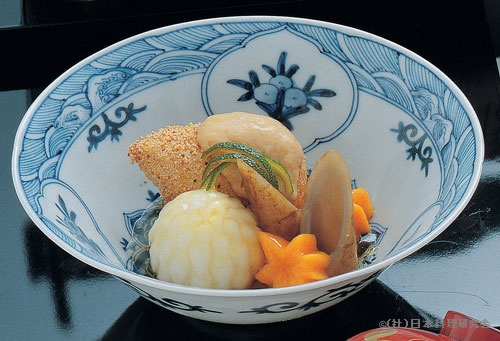
For the ebi-imo taro filled with duck in this simmered dish, duck is set inside, and following the idea that richness calls for richness, we top it…
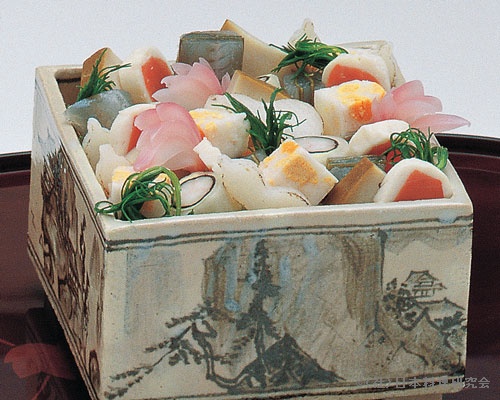
The vinegared dish is this feature's 'Autumn-Colored Chirashi.' There's no sushi rice underneath, but I arranged it in a chirashi style. The…
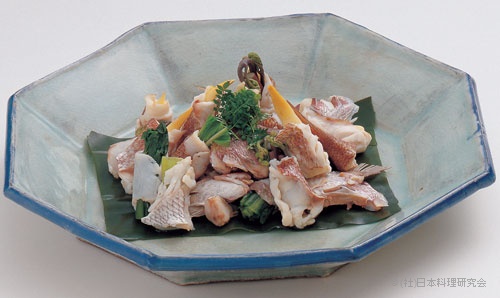
The steamed course's sakura-dai and spring vegetables steamed with sake is meant to be the main dish of this meal. If it were just sea bream, it…
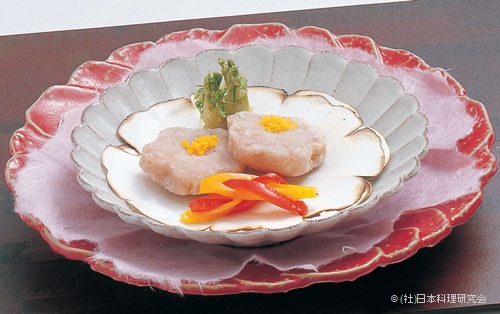
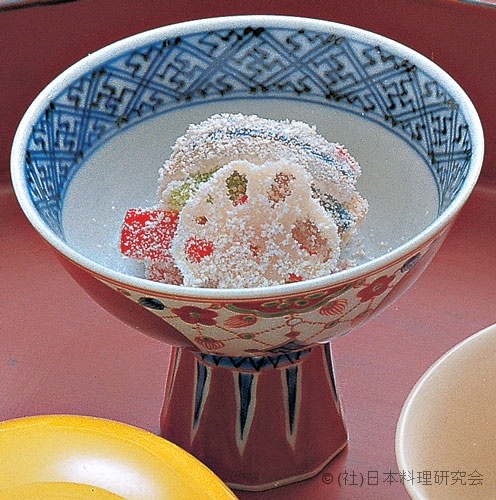
For the fried course, the lily bulb manju: steam the lily bulb with sake, press it through a sieve, mix in glutinous rice flour at a ratio of 30-40%…
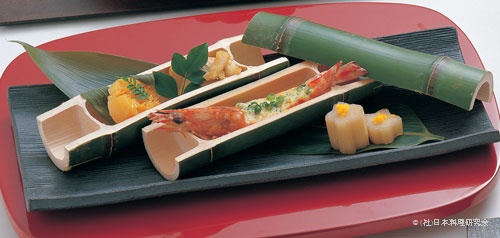
For the grilled scallop with shuto (a salted fermented fish-innard paste), the scallop is marinated for about 20 minutes in shuto mixed with beaten…
Mabuchi Shoji Co., Ltd.
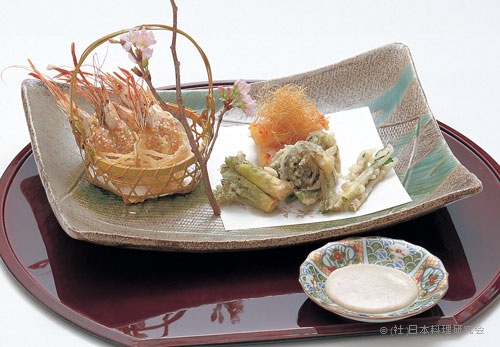
For the deep-fried course, the crab kasumi-age is fried using rice paper. For the potato basket, the potato is peeled into a continuous ribbon…
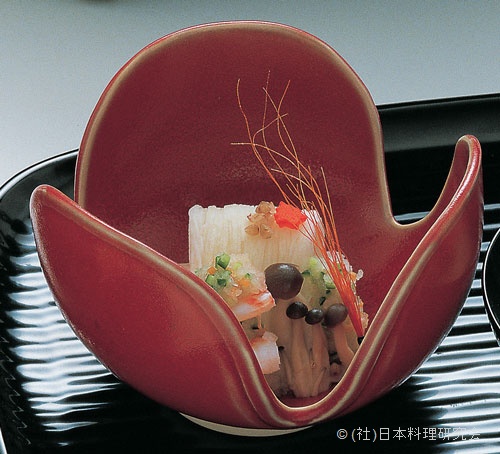
For the appetizer, nagaimo somen-style, I blanch the nagaimo briefly so its sliminess comes off cleanly. As for the saimaki shrimp, since even the…
Shibaura Kaiseki "Peony"
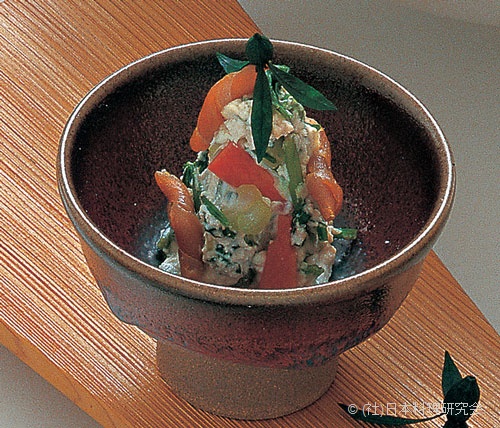
For the amuse-bouche's seven herbs and walnuts dressed in Fuku Ginjō sake-lees pickle, the dressing combines ginjō sake lees with a small amount of…
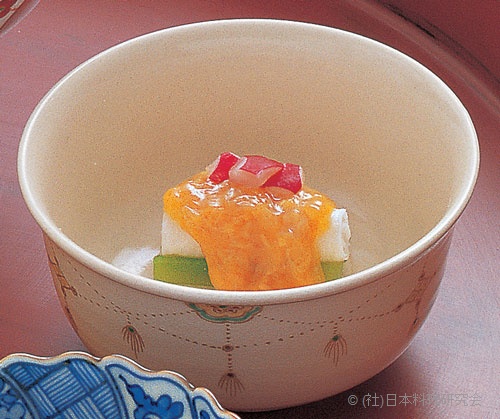
The appetizer is thin-sliced taro with fuki and konoko. The technique for the taro and konoko is one I learned some time ago; it's delicious paired…
Odawara SAKANA CUISINE RYŌ
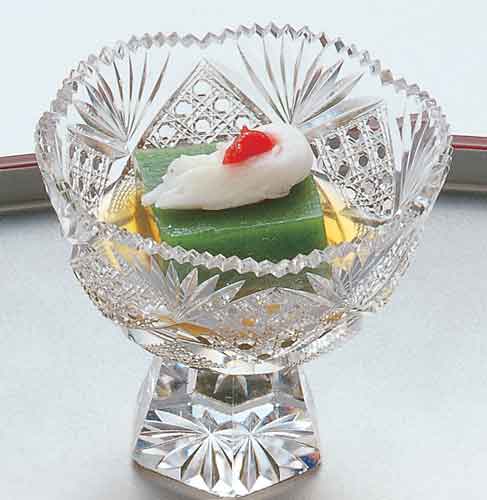
For the appetizer course's mugwort terrine, I use only the leaf portion of the mugwort, boiling it with a little wood-ash lye added. I was taught…
Odawara SAKANA CUISINE RYŌ
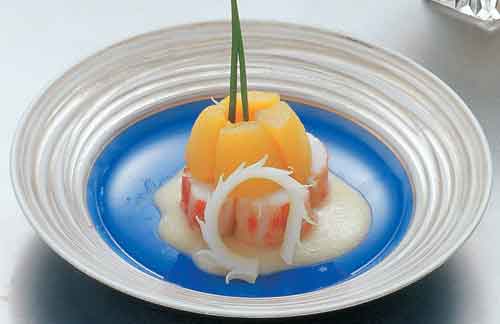
For the crab yamabuki, we use Japanese spider crab that is often landed in Sagami Bay. The tart Okinawan citrus used to keep the loquat from…
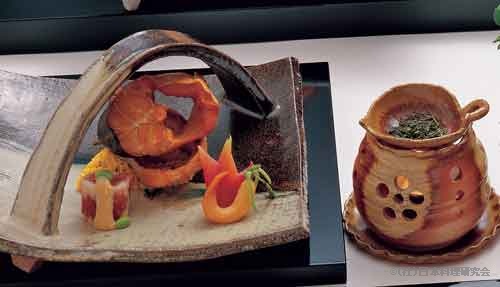
The grilled course, suzuki tea-smoked, was meant to be something of a showpiece for this exhibition, made with the image of chatsū, a tea-flavored…
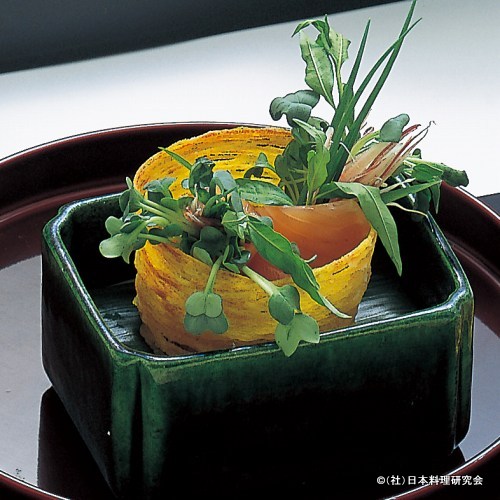
For the salmon cured in olive oil, I salt the salmon heavily, sprinkle it with the herb dill, and let it sit for around thirty hours — longer in…
Showing 24 of 910