Hitachi Izumi Club
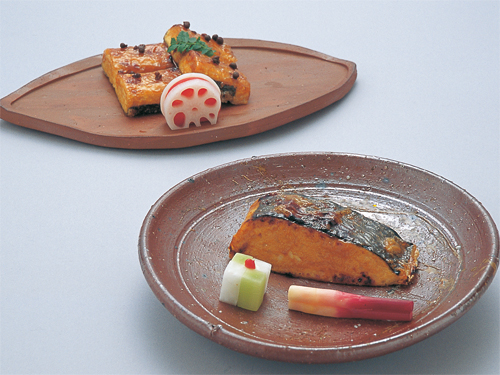
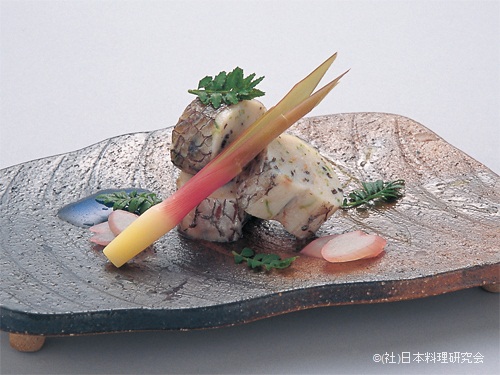
Fish skin coated with mountain yam, grilled with sansho leaf
Even for a veteran master chef, there are many dishes whose preparation can't be understood just by hearing about them or seeing them once. That's…
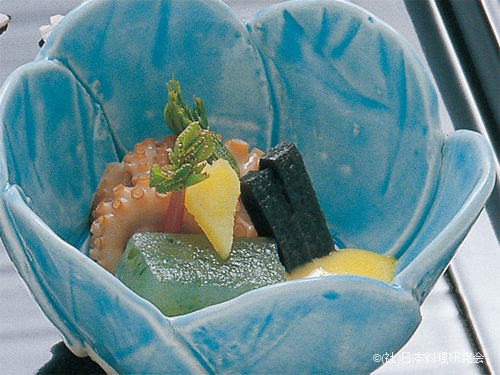
Hitachi Izumi Club
Even for a veteran master chef, there are many dishes whose preparation can't be understood just by hearing about them or seeing them once. That's…
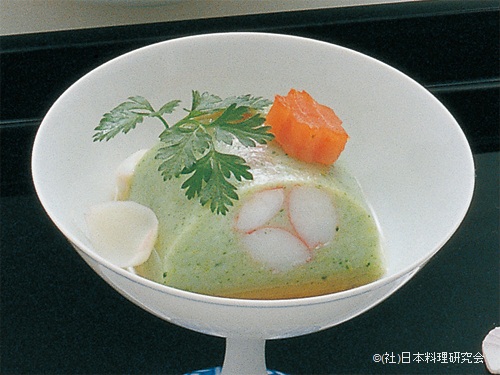
Gotanda, Gosaku
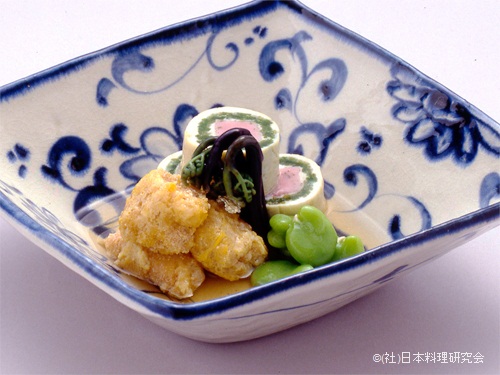
For the vinegared dish, kasugo, sayori, and rapeseed-blossom nagaimo (Chinese yam) roll: on plastic wrap, thinly pour and set finely julienned…

Gotanda, Gosaku
The raw konnyaku is in a soft state — reduce the lime any further and it won't set.

Gotanda, Gosaku
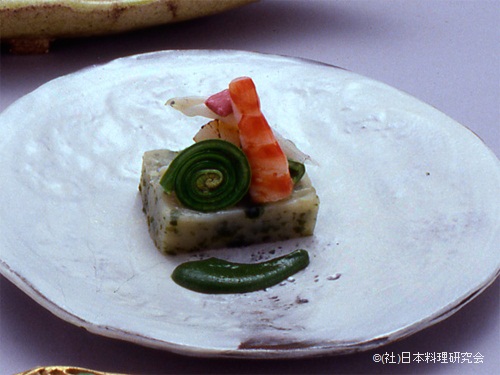
The crab and young-greens mold is a broccoli tofu. To keep it from becoming watery, boil the broccoli, then drain it hot right after boiling, without…

Gotanda, Gosaku
Amagi-ae is a wasabi dressing. Wasabi-zuke (pickled wasabi) is combined with tofu that has been put through a food processor to make the dressing.

Gotanda, Gosaku
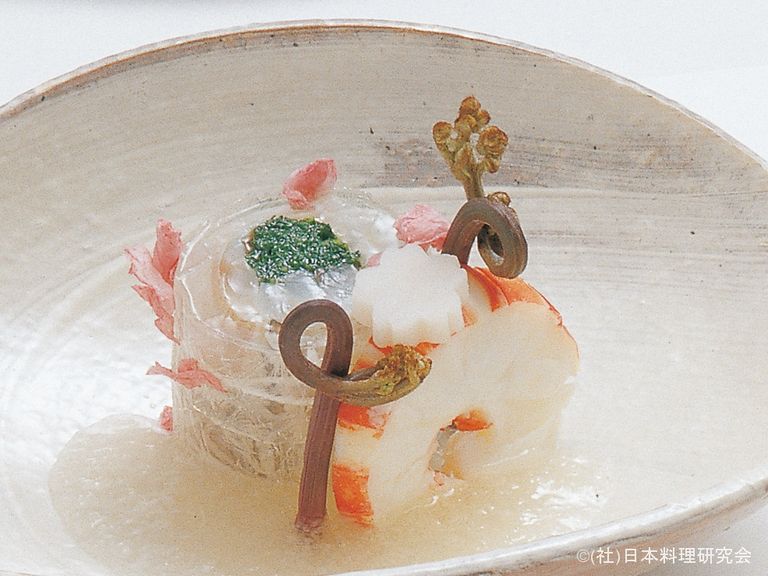
For the soup course, clam and cherry-blossom sesame tofu: quickly heat the clams through, cut them with a knife, and wrap them in well-kneaded white…
FREE

Tokyo Airport Restaurant
Even for a veteran master chef, there are many dishes whose preparation can't be understood just by hearing about them or seeing them once. That's…
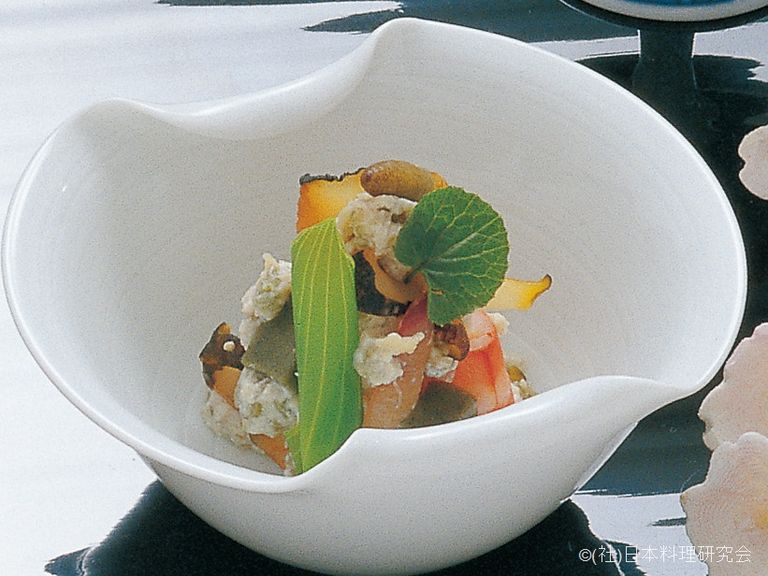
Tokyo Airport Restaurant
Even for a veteran master chef, there are many dishes whose preparation can't be understood just by hearing about them or seeing them once. That's…
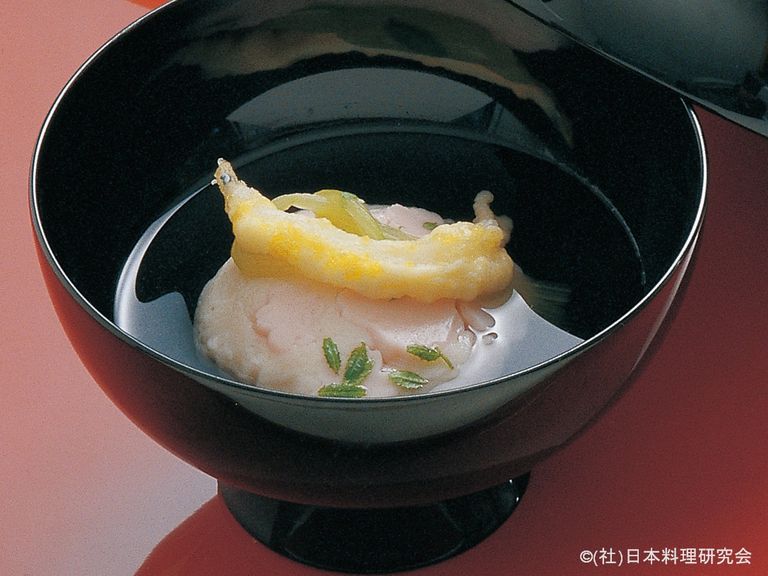
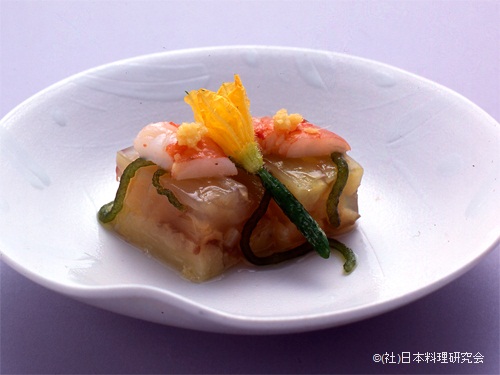
Jellyfish cut into fine strips and marinated in sweet vinegar is sandwiched between pieces of Kamo eggplant (a round Kyoto heirloom eggplant) and set…

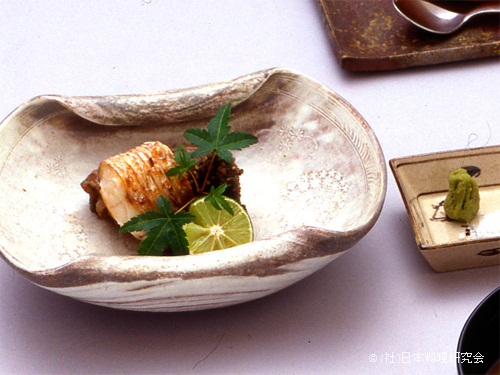
For the conger eel and mountain udo roll: conger eel is usually rolled Yanaka-style with the skin facing out, but here I placed the skin on the…

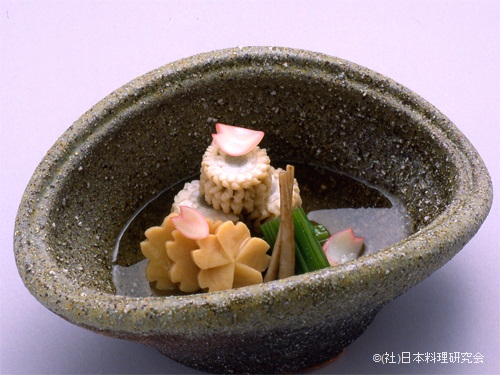
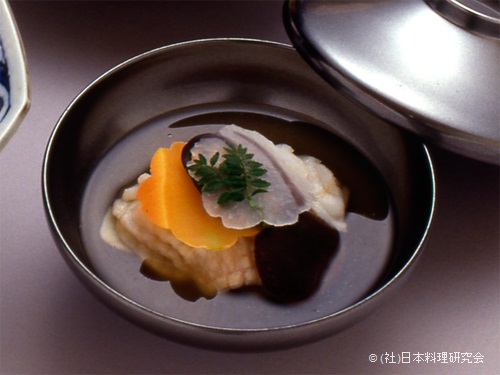
For the simmered dish, sakura-fu and Japanese parsley yuba-wrapped roll: normally "sakura-fu" brings to mind wheat gluten shaped like cherry…

For the guji, Ōmi konnyaku, and rapeseed-blossom kombu-cured dish: normally the skin is removed when kombu-curing tilefish (guji), but since the area…

For the appetizer (sakizuke): since evening guests are often here for business entertaining, I basically keep it as something that pairs well with…

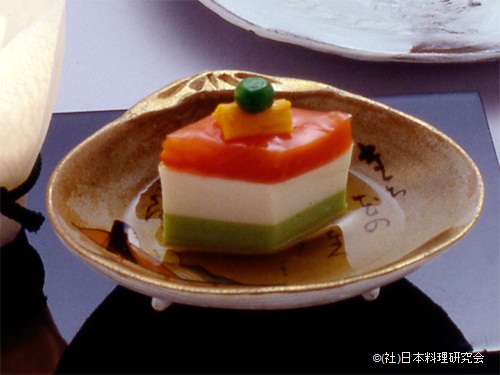
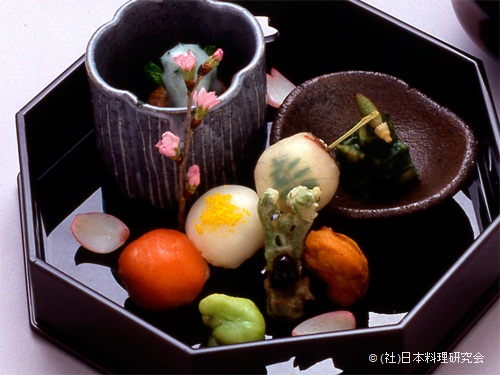
For the appetizer, I consciously incorporate seasonal ingredients that evoke that time of year. Atop the three-colored mold of wild mountain…

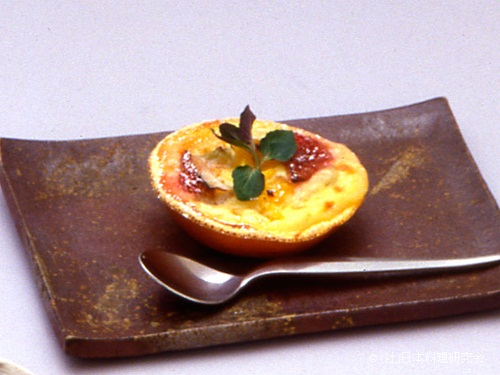
For dessert, the grilled fruit: hollow out an iyokan (a Japanese citrus) to make it into a container.

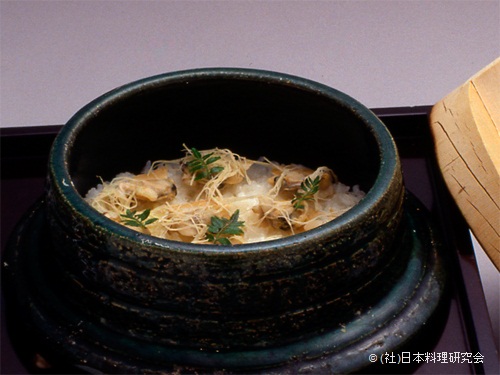
For the rice course, clam rice: extract the clam's dashi, remove the meat from the shells, score it finely, and cut it into bite-sized pieces…

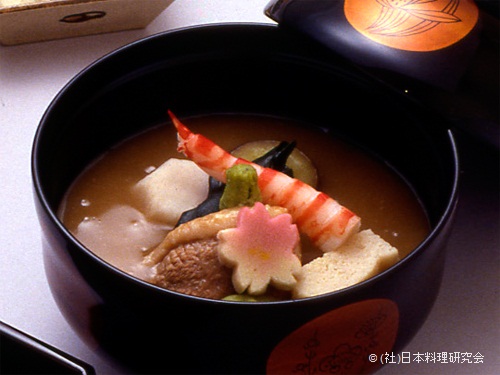
For the warm dish course: simmer the vegetables, fu (wheat gluten), and shrimp in white happō dashi beforehand. Coat the duck meat with potato starch…


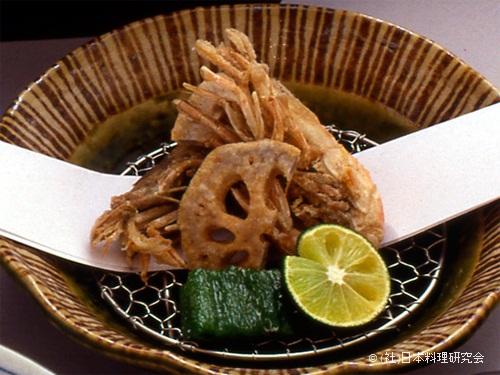
For the tome-zakana (final sake-accompanying dish before rice): coat the gasu ebi and Kaga lotus root with kuzu starch and deep-fry them in oil.

For the grilled course, salt-grilled nodoguro: fillet the nodoguro into three pieces (sanmai-oroshi), remove the small bones, lightly salt it, cut it…

For the soup course, the fat greenling kuzu-tataki: fillet the fat greenling into three pieces, remove the small bones, salt it lightly, score the…

As the spring vegetable course, the bamboo shoots, udo, and horsetail shoots dressed with kinome: remove the bitterness from the bamboo shoots and…

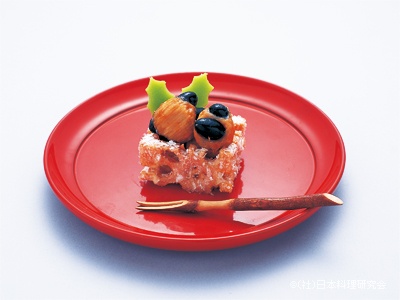
For Mamemaki (bean-scattering), I used lotus root to bring out a difference in texture and flavor.

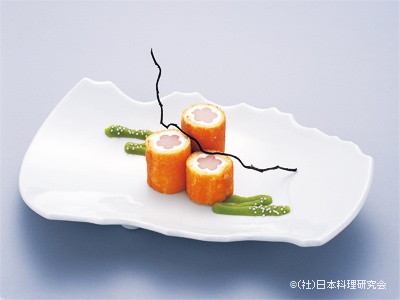
For the Ume ni Uguisu (Plum Blossom and Bush Warbler) plum-fragrance roll cake: since the castella sponge is already sweetened, I kept the yokan and…
Showing 24 of 4,859